Does a Minor Scrape Really Matter in 2026? Why Your Auto Body Shop in Redlands Is Seeing More Total Losses
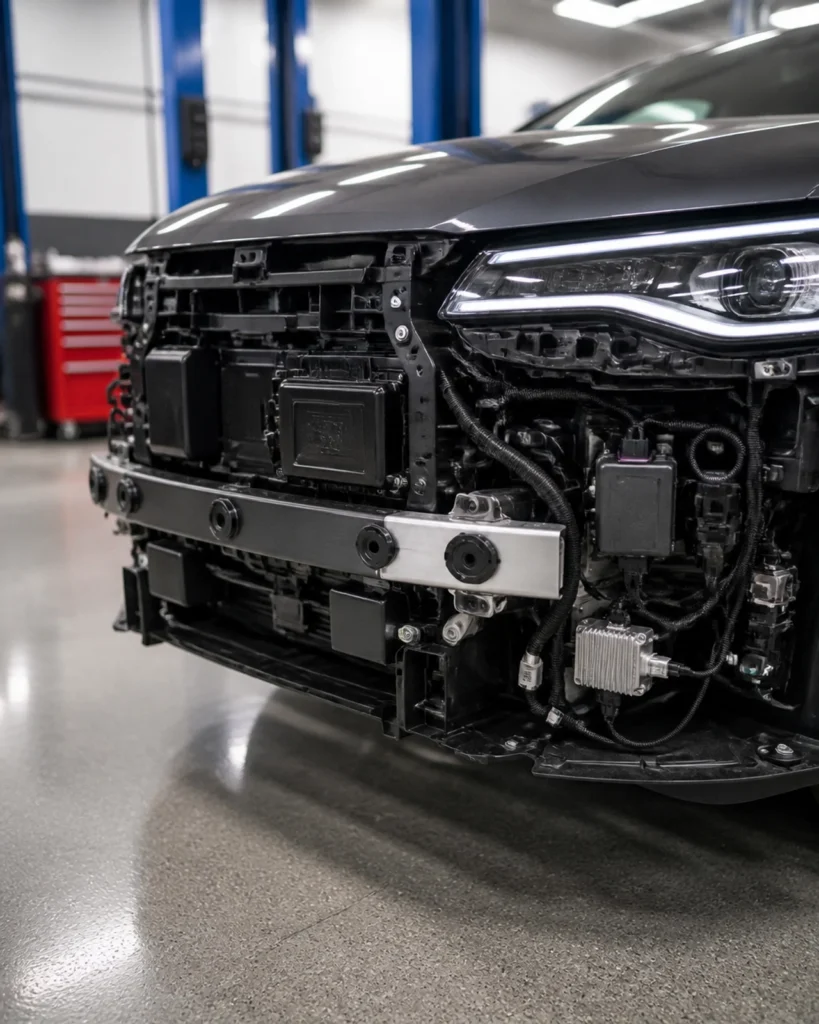
At RVCCR, we hold certifications from Tesla, Rivian, Ford, Honda, Mazda, and Subaru, along with RVDA certification for motorhomes and trailers. As a family-owned business serving the Inland Empire for over 21 years, we have watched the evolution of automotive technology transform from simple metal and plastic into complex mobile computers. In 2026, the question "Does a minor scrape really matter?" has a much more expensive answer than it did even five years ago. What used to be a $500 cosmetic fix at your local auto body shop redlands is now frequently the deciding factor in an insurance company’s decision to total your vehicle.
The landscape of collision repair has shifted dramatically. In 2024, the Total Cost of Repair (TCOR) reached a record high of $4,730, and by the end of 2025, that figure climbed further to approximately $4,818, according to the CCC Intelligent Solutions Q3 2025 Crash Course Report. For drivers in Redlands, Loma Linda, and San Bernardino, this means that even a low-speed parking lot mishap can trigger a cascade of technical requirements that far exceed the visible damage…
The Invisible Complexity of the 2026 Bumper
To understand why a scrape matters, you have to look behind the "skin" of the vehicle. In 2026, a bumper is no longer just a sacrificial piece of plastic designed to absorb impact. It is a high-tech housing for the Advanced Driver Assistance Systems (ADAS) that keep you safe on the I-10 or the 210 freeway.
Behind that silver or black plastic cover sits a network of ultrasonic sensors, long-range radar modules, and sometimes even LIDAR components. These systems govern your automatic emergency braking, blind-spot monitoring, and adaptive cruise control. When a vehicle suffers even a "minor" scrape, the impact force: however slight: can shift the mounting brackets of these sensors by just a few millimeters. In the world of ADAS, a three-millimeter shift at the bumper can translate to a three-foot error in object detection at highway speeds.
The Data of Loss: Why Frequency is Climbing
The insurance industry uses a specific formula to determine if a car is a "total loss." Usually, if the cost of repair plus the salvage value exceeds the Actual Cash Value (ACV) of the car, the vehicle is totaled. In 2026, we are seeing a "perfect storm" of factors that push even driveable vehicles into the total loss category.
According to the CCC Intelligent Solutions Q3 2025 Crash Course Report, the share of total loss claims reached 23.1% in 2025. This means nearly one out of every four accidents results in a totaled vehicle. Even more concerning for local drivers is the rise of "driveable total losses." These are vehicles that look perfectly fine and can be driven away from the scene, but the internal technical damage is too costly to rectify.

The 12.7-Year Paradox in Redlands
One of the most significant contributors to the rise in total losses is the aging of the American "car parc." Data from Repairer Driven News highlights that the average vehicle age in the U.S. reached 12.7 years in 2024, and it is projected to hit 13 years by the end of 2026.
This creates a paradox for our family-owned collision repair facility. An older vehicle, while structurally sound and reliable, has a lower market value. However, the cost of parts and the specialized labor required to fix it do not decrease as the car gets older. In fact, finding OEM parts for a 12-year-old vehicle can sometimes be more expensive due to supply chain thinning. When you combine a $4,000 repair bill (which is now the average for a moderate "minor" hit) with a car that is only worth $6,000 on the open market, the insurance company will almost always choose to total the vehicle.
The Economic Reality: Labor and Inflation
It isn't just the sensors that are driving up costs. The cost of the experts who fix them has also risen. In 2024, the industry saw a 4.5% average labor rate increase. As vehicles become more complex, the level of training required for a technician increases. At RVCCR, our technicians aren't just "body men"; they are specialized electronics experts who must understand the communication protocols between a Tesla’s infotainment system and its peripheral cameras.
Furthermore, parts inflation continues to outpace general inflation. CCC reported that the average price per part rose by 6.0% in 2025. When you add up the rising cost of the plastic, the rising cost of the sensors, and the rising cost of the labor to install and calibrate them, that "minor scrape" begins to look like a major financial hurdle.
The Calibration Crisis: The $1,000 Difference
The single biggest change in collision repair over the last five years is the requirement for "Scanning and Calibration." In 2026, nearly 87% of all repairs at a certified shop include a diagnostic scan. This is a process where we plug a computer into your car’s OBD-II port to see what the car "thinks" is wrong.
Even if no dashboard lights are on, the scan often reveals "soft codes": errors in the sensor network caused by the impact. Once the repair is done, we must perform a calibration.

Calibration involves setting up specific targets at precise distances from the vehicle and using laser-guided tools to ensure the car’s "eyes" are pointing exactly where they should be. CCC data shows that calibrations are now present on over 30% of all repairable estimates: a 30% increase in just one year. A single calibration can add anywhere from $250 to $1,500 to a repair bill, depending on whether it's a "static" calibration (done in the shop) or a "dynamic" calibration (done while driving the vehicle under specific conditions).
For a Redlands resident driving a 2018 Honda Accord (roughly 8 years old), a bumper scrape that requires a new sensor and a calibration can easily total $3,500. On an older car, that represents a massive chunk of its total value.
Static vs. Dynamic Calibration
This is where a lot of drivers get blindsided, because "calibration" sounds like one simple line item. In real life, it can be several very different procedures, and the difference matters for both cost and repair time.
A static calibration happens inside the shop. The vehicle is positioned on a level surface. Tire pressures are checked. Ride height may be verified. Sometimes the alignment has to be confirmed first. Then the technician sets up OEM-specified targets, boards, or patterns at exact distances and angles in relation to the vehicle centerline. A scan tool communicates with the car while the system looks at those targets and compares what it "sees" to where the module expects straight-ahead to be.
That sounds simple on paper, but the setup work is serious. If the floor is out of level, if the target is off by a small amount, if the steering wheel is not centered, or if a bracket behind the bumper is still slightly tweaked, the calibration can fail or complete with bad data. That is why certified shops treat calibration like a measurement procedure, not a quick button push.
A dynamic calibration is different. The vehicle has to be driven under OEM-defined conditions so the camera, radar, or other ADAS component can releference itself to the real world. Depending on the make and model, that can mean:
- maintaining a specific speed range for a certain period of time
- driving on clearly marked roads
- avoiding heavy rain, fog, or low-visibility conditions
- making sure lighting conditions fit the procedure
- using a second technician in some cases so one person can drive while another monitors the scan tool and prompts
I-CAR has noted that dynamic calibrations are not the same thing as a normal test drive. They are procedure-driven operations that may require specific road types, speeds, weather, and lane markings. Some OEM procedures also require a static calibration first, followed by a dynamic drive to finish the learning process. That sequence adds labor, documentation time, and sometimes scheduling delays if weather or traffic do not cooperate.
For drivers, this explains why the estimate can grow after teardown. A bumper hit may not just need a part and paint. It may need:
- pre-scan
- disassembly
- structural or bracket checks
- wheel alignment confirmation
- static calibration setup
- dynamic road calibration
- post-scan and verification
That is a very different workflow than the old days of sanding, painting, and handing over the keys. And in the Inland Empire, dynamic calibrations can be especially tricky because finding safe, consistent road conditions at the right speed is not always as easy as it sounds during busy commuter hours.
The 70% Rule in California
A lot of customers have heard some version of a "70% rule" and assume California has one hard statewide number. In practice, the more important real-world concept is California’s total loss formula: if the cost of repair plus the salvage value meets or exceeds the vehicle’s actual cash value (ACV), the insurer may declare the vehicle a total loss.
That is why a car can look repairable and still get totaled. The insurance company is not only asking, "What will it cost to fix?" It is also asking, "What is this wrecked vehicle still worth if we sell it as salvage?" On older cars, the ACV can be modest. On newer technology-heavy cars, the salvage value can be surprisingly high. Put those together, and the math changes fast.
Here is a simple example:
- Actual Cash Value (ACV): $10,000
- Estimated Repair Cost: $5,800
- Salvage Value: $1,400
Repair Cost + Salvage Value = $7,200
In that example, the vehicle is at 72% of ACV. That is why people casually refer to a "70% rule." It is not the legal formula by itself, but once the total gets into that range, the vehicle often enters total-loss territory depending on the final numbers, supplements, and insurer handling. One more hidden bracket, one more sensor, one more calibration, and the file may tip over.
Now look at a clearer total-loss example:
- ACV: $9,500
- Repair Cost: $6,900
- Salvage Value: $2,900
$6,900 + $2,900 = $9,800
That exceeds the ACV, so the insurer is very likely to total the car.
Here is another example that surprises people because the visible damage seems minor:
- ACV: $14,000
- Initial photo estimate: $1,250
- Teardown repair estimate: $7,100
- Calibration and scan charges: included in that $7,100
- Salvage Value: $3,300
$7,100 + $3,300 = $10,400
At first glance, that is still below ACV. But if teardown finds one radar module, a harness section, and an absorber, the repair could rise to $10,900. Then:
$10,900 + $3,300 = $14,200
Now the vehicle crosses ACV and can become a total loss.
This is also why customers get frustrated when an app-based estimate says the repair looks minor. Photo estimating usually captures the visible skin damage. The total-loss math gets decided by the hidden damage and the salvage value. Once the bumper comes off, the real numbers start talking.
If you want a plain-English version of the formula, it is this:
Insurance asks whether fixing the vehicle and then giving up the money they could have recovered from salvage makes financial sense. If not, they total it.
The Salvage Market Boom
There is another 2026 twist that many drivers never hear about: the wrecked car itself is worth more than it used to be.
Modern salvage buyers are not just looking for scrap metal and a usable door panel anymore. They are hunting for:
- radar units
- cameras
- infotainment modules
- wiring harness sections
- OEM headlamps
- wheels with integrated sensor systems
- EV battery assemblies and related high-voltage parts where legally and safely recoverable through proper channels
That demand matters because it pushes salvage value upward. And remember, in California’s total loss formula, higher salvage value makes it easier for the insurer’s math to point toward a total loss.
Think of two cars with the same repair bill:
Vehicle A
- ACV: $11,000
- Repair Cost: $6,500
- Salvage Value: $1,000
- Combined total: $7,500
Vehicle B
- ACV: $11,000
- Repair Cost: $6,500
- Salvage Value: $3,400
- Combined total: $9,900
Same visible damage. Same repair cost. Different salvage value. Vehicle B is much closer to being totaled simply because the damaged vehicle still contains valuable recoverable components.
This is especially relevant for newer vehicles packed with ADAS and for EVs. Even when the outer bumper looks like a simple plastic part, the salvage pool sees value in the electronic ecosystem behind it. A late-model vehicle may have a damaged corner but still contain expensive modules elsewhere on the car that remain valuable in the used parts market.
That creates a weird modern reality: the more technology your vehicle has, the more expensive it is to repair properly, and in some cases the more valuable it is as salvage after a collision. Both sides of the equation can work against repairability.
For families trying to understand why a drivable car got totaled, this is often the missing piece. The insurer is not only looking at the damage. It is looking at what the vehicle can bring at salvage auction, and that number has more influence today than many people realize.
Why Redlands Drivers are Seeing More Totals
The Inland Empire presents a unique set of challenges. We have high-speed commuter traffic, extreme heat that can affect the lifespan of electronic components, and a used car market that has seen significant price fluctuations.
When you bring your vehicle to us for a free estimate, we look at more than just the paint. We look at the "hidden" damage that insurance adjusters might miss. In 2026, many insurance companies are using AI-based photo estimates. You take a picture of your bumper, upload it to an app, and the AI says, "That’s a $600 repair."
However, once we get the bumper off in our shop, we often find:
- Cracked Sensor Brackets: These are often part of the inner bumper structure and cannot be "patched."
- Wiring Harness Friction: Even a small nudge can pinch a wire against the frame, leading to intermittent electrical failures weeks later.
- Absorber Deformation: The foam or plastic energy absorber behind the bumper is a one-time-use component. If it’s compressed, it must be replaced to maintain crash safety.
Inland Empire Climate and Sensor Health
Redlands drivers deal with a climate that is hard on vehicles in ways that do not always show up in a quick estimate. Summer highs in Redlands commonly run well into the 90s, and triple-digit days are a normal part of Inland Empire life. Anyone who has opened a car door after a July afternoon in a parking lot already knows the inside and outside surfaces can get brutally hot.
That matters for bumper-mounted electronics because those systems live in a harsh environment. They are exposed to:
- repeated heat cycling
- road vibration
- dust
- UV exposure on surrounding trim and coatings
- wash chemicals and road contamination
- expansion and contraction of plastic covers, brackets, and fasteners
Over time, 100+ degree ambient heat can contribute to aging in the adhesives, sealants, and plastic housings that help keep sensors stable and protected. We are careful here not to overstate what heat alone does, because every OEM designs these systems differently. But from a repair planning standpoint, heat matters. Adhesive-backed components, foam isolators, retaining tabs, and electronic enclosures can become more brittle, more warped, or less predictable as a vehicle ages in an Inland Empire environment.
Why does that matter after a scrape? Because a component that might have tolerated a small impact when new may not tolerate that same nudge six or eight summers later. A bumper cover can flex. A bracket can move. A sensor mount that is already heat-aged may crack instead of springing back. A sealed housing that has lived through years of heat cycling may be more vulnerable to moisture intrusion after impact.
This is one reason we do not treat a local bumper hit like a purely cosmetic event. In Redlands, climate is part of the vehicle’s repair story. A quick photo estimate cannot tell you whether the outer plastic is all that moved, or whether a heat-aged mount behind it has shifted just enough to throw off the sensor network.
For families who rely on lane departure warnings, blind-spot detection, parking sensors, and automatic emergency braking every day, that detail matters. The goal is not just to make the bumper look straight again. The goal is to make sure the safety systems are stable in the same heat and traffic conditions the vehicle will face on the road tomorrow.
Case Study: The "Minor" 5-MPH Tap
Imagine a 2021 Toyota RAV4: a very common sight in the Redlands area. The driver is at a stoplight near the University of Redlands and gets tapped from behind at 5 mph. The silver paint is scuffed, and there is a small indentation.
In 2016, this was a "buff and paint" job. In 2026, here is the breakdown:
- Remove and Install Bumper Cover: $150
- Refinish/Paint Bumper: $450
- Replace Blind Spot Monitor Sensor (Damaged bracket): $650
- Pre-Repair Diagnostic Scan: $125
- Post-Repair Diagnostic Scan: $125
- ADAS Calibration: $450
- Materials and Shop Supplies: $100
- Total: $2,050
If that same RAV4 was a 2014 model (closer to the 12.7-year average age), that $2,050 repair would likely trigger a total loss, even though the car is perfectly driveable.

Your Legal Right to Choose
One of the biggest practical issues we see is not just repair complexity. It is claim handling. In California, you generally have the right to choose your repair facility. Anti-steering protections exist so an insurer cannot simply force you into a specific shop after a loss.
That matters more in the age of app estimates and AI-only first looks. A photo tool may be useful for starting a claim, but it is not the final word on a modern collision repair. If your insurer says the damage looks minor based only on images, you can push back in a calm, professional way and say:
- "I want the vehicle inspected at a certified repair facility."
- "I am choosing my own shop."
- "Please document that this is only a preliminary estimate pending teardown."
- "Please review the supplement once hidden damage is found."
That is not being difficult. That is being smart.
California’s anti-steering framework is important because some customers still hear versions of:
- "You need to go to our preferred shop."
- "That other shop charges too much."
- "Our app estimate is all we need right now."
- "If you go elsewhere, your claim may be delayed."
The law is there to protect consumers from exactly that kind of pressure. An insurer can communicate, inspect, and negotiate. But you still have the right to bring your vehicle to a facility you trust.
For owners of Tesla, Rivian, Ford, Honda, Mazda, Subaru, and other technology-heavy vehicles, that choice matters because repair planning is not generic anymore. Proper scanning, teardown, part sourcing, structural measurement, and calibration require trained people and the right process. If a carrier’s first number comes from photos alone, that may only reflect visible damage, not the actual scope of safe repairs.
At RVCCR, we work with all major insurance companies, but we work for the customer sitting in front of us. That means documenting hidden damage, supporting supplements with repair logic, and explaining why the OEM-required steps are necessary. If your estimate started in an app and the real repair story begins once the bumper comes off, we help bridge that gap.
Why Certification Matters More Than Ever
Because the "minor" has become "major," where you take your car is the most important decision you can make after an accident. As a Tesla and Rivian certified shop, we are required to follow strict OEM (Original Equipment Manufacturer) repair procedures.
Generic shops might try to save money by not performing a calibration or by using "aftermarket" sensors. In 2026, this is dangerous. Aftermarket sensors often lack the precise frequency response needed for a car’s safety software to act correctly. If your automatic braking doesn't engage because a cheap sensor was used, the "minor scrape" you saved money on could lead to a catastrophic collision later.
At RVCCR, we combine collision, paint, and complete mechanical work under one roof. We back all our work with a written lifetime warranty, because we know that a repair in 2026 isn't just about how the car looks: it's about how the car "thinks."
A Step-by-Step Guide to the Total Loss Process
If you have never been through a total loss claim before, the process can feel confusing fast. Here is the typical sequence, in plain English, from the tow truck to the payout check.
1. The tow and intake
After the accident, the vehicle is towed either to a storage yard, your home, or a repair facility. If the car is drivable, you may bring it in yourself. This early decision matters, because once the vehicle lands at a qualified shop, the repair plan usually becomes more accurate than a photo-only estimate.
2. Initial estimate
The insurer may create a preliminary estimate from photos, an app, or an adjuster inspection. This number is often just a starting point. It may only reflect visible damage.
3. Shop inspection and teardown
A certified facility begins a hands-on evaluation. Panels may be removed. Diagnostic scans are performed. Mounting points, brackets, absorbers, wiring, and sensor locations are inspected. This is usually where the estimate becomes more realistic.
4. Supplement submission
If hidden damage is found, the shop sends a supplement to the insurer. This is normal. Supplements are not a sign that something went wrong. They are usually a sign that the initial estimate was incomplete.
5. Total-loss review
Once the insurer has the fuller repair cost, it compares:
- repair cost
- expected supplements
- salvage value
- actual cash value of the vehicle
If the formula points to a total loss, the file moves from repair handling to total-loss handling.
6. Valuation report
The insurer determines ACV using market data, comparable vehicles, condition, mileage, options, and local factors. This is the point where many customers should slow down and read carefully. If the valuation misses trim level, options, tire condition, service history, or overall condition, you may be able to challenge it with documentation.
7. Settlement offer
The insurer presents a settlement amount, usually based on ACV minus any applicable deductible on a first-party claim. If there is a lender, the payoff process also comes into play. If you owe more than the ACV, gap coverage, if you have it, may matter.
8. Vehicle release and title paperwork
In a standard total loss, the insurer pays the owner or lienholder and takes possession of the vehicle, then handles salvage title processing. If you choose to retain the vehicle where allowed, the payout is typically reduced by the salvage value and the title status changes accordingly.
9. Payment
Once paperwork is complete, the check or electronic payment is issued. Timing can vary depending on title status, lienholder response, storage issues, and whether the valuation is being disputed.
10. Replacement planning
This is the part people underestimate. A total loss is not just a claim outcome. It is a family logistics event. You are arranging transportation, dealing with lender paperwork, looking at replacement prices, and trying to keep life moving. That is one reason having a real shop involved early can help. Good documentation on the front end often creates fewer surprises on the back end.
Protecting Your Vehicle’s Value
If you find yourself with a scuffed bumper or a minor dent, don't ignore it. Even if you don't intend to file an insurance claim, the "hidden" electronic damage could be compromising your safety systems.
Here is our advice for Redlands vehicle owners in 2026:
- Check for "Soft" Failures: If your cruise control feels "choppy" or your blind-spot lights flash randomly after a bump, your sensors are likely misaligned.
- Insist on a Scan: If a shop tells you they can fix your 2020 or newer car without a diagnostic scan, find a different shop.
- Understand Your Policy: With total losses on the rise, check if you have "New Car Replacement" or "Gap Insurance," especially if you are driving a late-model EV or luxury SUV.
- Keep Your Sensors Clean: Sometimes a "sensor failure" is just a build-up of Inland Empire dust or road grime, but if a cleaning doesn't fix it, it's time for a professional look.
The Path Back to the Road
Dealing with an insurance claim and the possibility of a total loss is stressful. Our goal at RVCCR is to act as your partner in this process. We coordinate with all major insurance companies to ensure that they understand the technical necessity of the repairs we propose. We don't just "fix cars"; we restore the sophisticated safety net that protects you and your family.
Your vehicle is the gateway to your next California adventure: whether that’s a weekend in Big Bear or a trip to the coast. Don't let a "minor" scrape turn into a major safety risk or a lost investment. Bring your vehicle to a team that understands the 2026 reality of automotive repair.
Drive with confidence, knowing that your car’s technology is as sharp as its paint. Stop by our Redlands facility, meet our family, and let us show you why we’ve been the trusted name in collision repair for over two decades.
Restore your safety. Reclaim your adventure. Visit RVCCR today.
Sources Cited:
- CCC Intelligent Solutions, "Q3 2025 Crash Course Report," published September 2025. Data regarding TCOR ($4,818), total loss share trends, scan frequency, and calibration growth.
- CCC Intelligent Solutions, "Crash Course 2026 Report Finds Higher Severity and Record Total Loss Frequency," published March 31, 2026. Data regarding total loss share (23.1%) and calibration frequency trends.
- Repairer Driven News, "Average Vehicle Age Reaches 12.7 Years," citing S&P Global Mobility and CCC industry data for 2024-2026 trends.
- Bureau of Labor Statistics / Industry Survey Data, "Automotive Repair Labor Rate Trends 2024," noting the 4.5% year-over-year increase.
- I-CAR Repairability Technical Support, "Dynamic Calibrations Compared to a Test Drive," and "Considerations For Dynamic Calibration," regarding OEM procedures, road conditions, and dynamic calibration requirements.
- California total loss formula references discussing repair cost plus salvage value versus actual cash value (ACV), including state-law summaries and industry legal resources.
- Repairer Driven News, "New anti-steering regulations approved in Calif. take effect Jan. 1," regarding California anti-steering protections and repair facility choice.
- WeatherSpark, "Climate and Average Weather Year Round in Redlands, California," regarding typical summer heat conditions in Redlands.
Need a repair estimate?
Skip the wait — send us a few photos and our team will get back to you fast.
Start a Photo Estimate →