7 Mistakes People Make with Certified Collision Repair
Getting into an accident is stressful, but the repair process shouldn't be. Whether you’re driving a brand-new Tesla, a heavy-duty Ford F-150, or a luxury Class A motorhome, the decisions you make in the 48 hours following a collision will dictate the safety, resale value, and longevity of your vehicle for years to come.
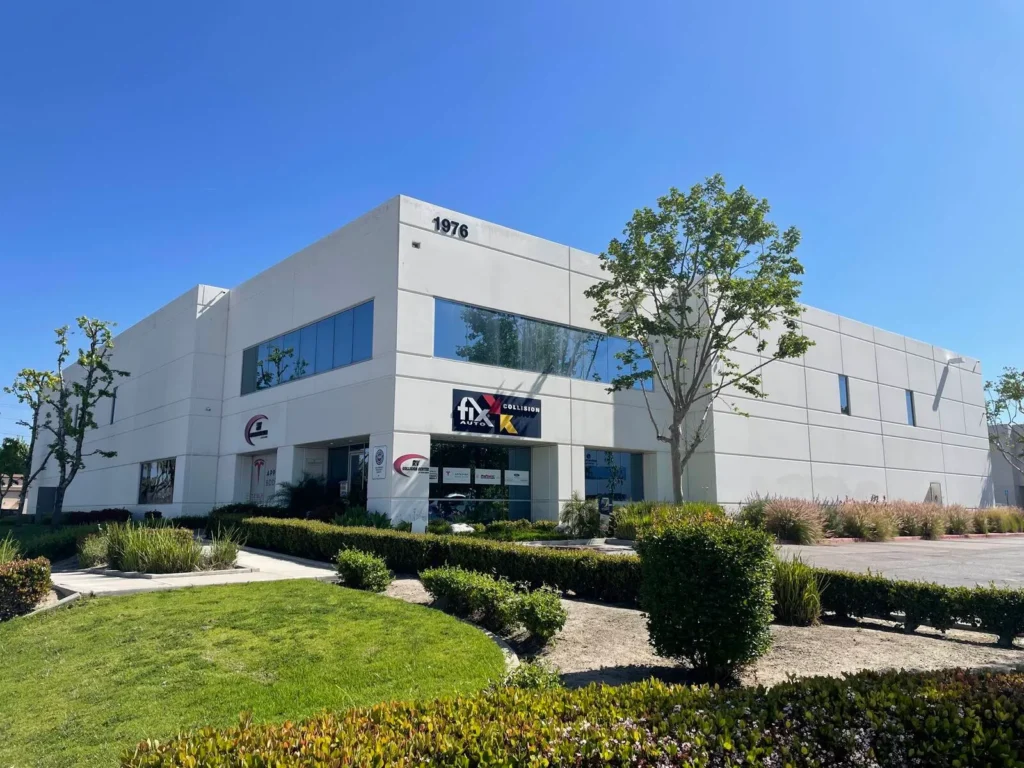
At RVCCR, we’ve spent 21 years as a family-owned business in Redlands, earning certifications from Tesla, Rivian, Ford, Honda, Mazda, and Subaru, alongside our RVDA certification for motorhomes and trailers. We’ve seen every mistake in the book, from owners being "steered" by insurance companies to shops that skip the critical electronic calibrations required by modern safety systems.
The complexity of today's vehicles means that a "minor scrape" is rarely just a cosmetic fix. Modern cars are rolling computers, and RVs are mobile houses built on heavy-duty chassis. Restoring them to factory specifications requires more than a fresh coat of paint; it requires a deep understanding of structural integrity, Advanced Driver Assistance Systems (ADAS), and OEM (Original Equipment Manufacturer) standards.
If you want to ensure your vehicle is returned to its pre-accident condition without compromising your family’s safety, avoid these seven common mistakes…
1. Falling for "Insurance Steering" and Preferred Shop Lists
One of the most common mistakes happens before the car even reaches a tow truck. Many drivers believe they must use the repair shop recommended by their insurance company. This practice is known as "steering."
In California, you have the legal right to choose your repair facility. While insurance companies often have "Direct Repair Programs" (DRP) with certain shops, these partnerships are frequently based on the shop’s ability to keep costs low and cycle times fast, not necessarily on their specific certifications for your vehicle type.
California also gives consumers clear protections here. Under CA Insurance Code § 758.5 and California Code of Regulations § 2695.8, an insurer cannot require you to use a particular repair shop in order to settle your claim. An adjuster can give you a list of shops or explain a company program, but the final decision remains yours. That distinction matters, because the shop you choose will determine whether your vehicle gets OEM procedures, proper scanning, brand-specific structural work, and the right post-repair documentation.
When you choose certified auto collision repair in Redlands, you are choosing a facility that answers to the manufacturer (like Tesla or Ford) and the customer, not just the insurance carrier’s bottom line. A shop that prioritizes an insurance contract over an OEM certification might be pressured to use alternative parts or skip expensive diagnostic scans that are technically required by the vehicle manufacturer.
The practical takeaway is simple: when an insurance representative says, "We have a shop we work with," treat that as an option, not an instruction. Ask whether that shop is certified for your exact make. Ask whether they perform in-house scans and calibrations. Ask whether they document OEM-required procedures. If the answers are vague, slow the process down before authorizing repairs.
Always ask your adjuster: "Is the shop you're recommending certified by the manufacturer of my vehicle?" If the answer is no, you may be sacrificing the very specialized care your car or RV needs.
2. Treating ADAS Recalibration as an Optional Service
Modern vehicles are equipped with Advanced Driver Assistance Systems (ADAS). This includes your automatic emergency braking, lane-keep assist, adaptive cruise control, and blind-spot monitoring. These systems rely on cameras, radar, and ultrasonic sensors hidden behind bumpers, grilles, and windshields.
A major mistake many owners make is assuming that if the car looks fixed, the safety systems are working.

This is where collision repair has changed dramatically. Ten years ago, a bumper removal might have been treated as straightforward disassembly and refit. On many current vehicles, that same bumper cover may sit directly in front of a forward radar unit, wrap around parking sensors, or establish the mounting relationship for brackets that have to sit within very tight tolerances. Even a bumper R&I, meaning remove and install without replacing the bumper itself, can trigger a required calibration if the OEM procedure says sensor aim, mounting position, ride height, alignment angle, or component relationship must be verified afterward.
The industry has not always kept pace with that reality. The often-cited 88% figure should not be used loosely; it comes from a specific estimate review. A 2020 adasThink analysis found that 88% of required ADAS calibrations were missed in collision estimates (adasThink Report, 2020, as reported by Repairer Driven News). For consumers, the point is not the headline alone. The point is that calibration needs are easy to overlook unless a shop is building the repair plan from OEM procedures rather than from appearance alone.
So what does ADAS recalibration actually look like in a shop?
First, the repair team completes structural and body work that could affect sensor position. That can include replacing a bumper reinforcement, removing a bumper cover, replacing a windshield, performing a wheel alignment, correcting ride height issues, repairing a quarter panel with blind-spot radar behind it, or finishing suspension work after an impact. Before calibration begins, the shop needs the vehicle on a level surface, tire pressures set correctly, alignment verified if required, fuel load and ride height considered per OEM instructions, and all cargo or debris removed that could alter vehicle stance.
From there, the process usually goes in one of two directions: static calibration or dynamic calibration.
Static calibration is performed inside the shop or calibration bay. The vehicle is positioned on a known-level floor. Technicians place laser-guided measuring devices, aiming fixtures, floor references, strings, plumb marks, or OEM-specified target stands at precise distances from the vehicle centerline. A camera calibration target may sit several feet in front of the vehicle at an exact height. Radar aiming fixtures may use reflectors or target boards positioned at precise offsets. The technician then connects a diagnostic tablet or scan tool running OEM or OEM-approved software, enters the calibration routine, and follows step-by-step prompts. The software checks preconditions, confirms no blocking faults exist, and instructs the technician when target placement, steering angle, or sensor conditions are correct. If anything is out of spec, the routine may abort until the vehicle geometry or setup is corrected.
Dynamic calibration happens on the road, again following OEM procedure. After a scan tool starts the routine, the technician drives at specified speeds under required conditions so the system can relearn lane markings, vehicle trajectory, radar references, or camera orientation. This is not a casual "test drive." OEM procedures can call for clear lane lines, stable weather, certain speeds, a limited steering input range, and no active diagnostic faults. If those conditions are not met, the calibration may remain incomplete even though the vehicle drives normally.
Some vehicles require both static and dynamic calibration. A forward-facing camera might need a target-based setup in the bay and then a road verification sequence. A blind-spot radar system may require mounting checks, scan-tool initialization, and confirmation after alignment-related work. A surround-view camera setup may depend on target mats and floor layout. The exact path depends on the make, model, model year, and the operation performed.
The equipment matters because the tolerances are small. In a proper calibration environment, you may see:
- laser measurement tools used to confirm target placement,
- dedicated target boards and reflectors,
- wheel clamps or alignment references,
- OEM or OEM-compatible diagnostic tablets,
- brand-specific software subscriptions,
- controlled floor space with enough depth and width for target positioning,
- and documented pre-scan and post-scan reports tied to the repair file.
That level of process is why a shop cannot honestly "eyeball" ADAS readiness. A clean bumper gap does not confirm radar aim. A replaced windshield does not prove the forward camera sees the road correctly. A completed alignment does not automatically reset steering-angle relationships across every brand.
For EVs and high-tech vehicles, the stakes are even higher. A vehicle can leave a shop with no warning lights on and still have a driver-assistance function that is incomplete, offset, or unavailable in conditions where the driver expects it to work. That is exactly why ADAS calibration should be treated as part of restoring the vehicle to factory specifications, not as an upsell or optional add-on.
At RVCCR, we treat ADAS calibration as a non-negotiable safety requirement. Whether it’s a Tesla certified collision repair or a Ford truck repair, we follow the exact OEM procedures to ensure your "digital co-pilot" is fully functional before you get back on the road.
3. Accepting Aftermarket Parts on Tech-Heavy Vehicles
It’s a common tactic for insurance companies to write estimates based on "Alternative" or "Aftermarket" parts to save money. On a 15-year-old vehicle, this might be acceptable. On a modern EV or a complex RV, it can be a disaster.
Mistake number three is failing to insist on OEM parts for critical components. For example:
- Windshields: Aftermarket glass often lacks the optical clarity required for the cameras mounted behind the rearview mirror. This can cause calibration failures or "phantom braking."
- Bumpers: Modern bumpers are designed with specific thicknesses so that radar signals can pass through them. Aftermarket bumpers may use different plastics or recycled materials that interfere with sensor signals.
- Structural Components: High-strength steel and aluminum components in a Tesla or Rivian are engineered to fold in specific ways during a crash. Aftermarket parts are rarely tested to these exact crash standards.
A simple way to think about this is that a part does more than "fill the hole" on a modern vehicle. It has to fit physically, but it also has to interact correctly with sensors, mounting points, trim pressure, energy absorption, paint processes, and manufacturer repair standards. That is why a cheaper part on the estimate can become the more expensive decision over the full life of the repair.
Here is a practical comparison shoppers can use when reviewing an estimate:
| Component Comparison | OEM Bumper Cover | Aftermarket Bumper Cover |
|---|---|---|
| Radar transparency | Designed to the vehicle manufacturer’s material and thickness specifications so front radar systems can function within intended parameters | May use different resin mix, wall thickness, or reinforcement patterns that can affect radar transmission and sensor performance |
| Sensor and bracket fit | Built to match OEM mounting geometry for bezels, brackets, clips, and sensor openings | Fit can vary, which can create extra stress, altered sensor positioning, or rework during installation |
| Structural interaction | Intended to work with the vehicle’s crash-management design and adjoining OEM absorbers, brackets, and reinforcements | May not mirror OEM energy-management behavior or dimensional consistency exactly |
| Finish and prep time | Usually requires normal refinish prep and is engineered around factory fit expectations | Shops often spend additional time adjusting gaps, correcting surface issues, or modifying attachment areas |
| Warranty implications | Best aligns with OEM repair procedures and manufacturer certification expectations where applicable | May create disputes if a later issue involves part fit, sensor function, or whether the repair followed OEM guidance |
| Long-term value | Supports factory-spec restoration, resale confidence, and cleaner documentation for future buyers or appraisers | Up-front savings can be offset by fit issues, recalibration complications, or reduced buyer confidence later |
The key point is not that every aftermarket part is automatically unusable. The key point is that the margin for error is much smaller on vehicles loaded with cameras, radar, and brand-specific structural materials. On a tech-heavy front end, a bumper cover is no longer just cosmetic plastic. It is part of the system the vehicle uses to sense the road.
Consumers also miss the warranty angle. If a shop is certified and following OEM procedures, there is usually much less ambiguity when OEM components are used in OEM-required areas. When alternative parts are substituted, the conversation can get murkier fast: was the issue caused by the calibration, the bracket position, the part contour, the plastic composition, the mounting tabs, or the repair plan itself? That kind of finger-pointing is exactly what drivers want to avoid after a collision.
When it comes to OEM parts vs aftermarket for motorhomes or EVs, the choice is about more than just fit: it’s about the integrity of the entire vehicle’s safety architecture.
4. Overlooking the Difference Between Structural and Cosmetic Damage
Many people judge the quality of a repair by how the paint looks. While a flawless finish is important, it’s what’s underneath the paint that saves lives.
Modern vehicles, especially EVs like Teslas, use sophisticated "unibody" or "spaceframe" designs. A hit that looks like a simple dent in a quarter panel may have actually compromised the structural integrity of the vehicle's frame. Mistake four is choosing a shop that doesn't have the specialized "frame benches" and measuring systems required to verify the vehicle’s geometry.
If a shop isn't Tesla or Rivian certified, they likely don't have access to the proprietary repair manuals that dictate where a technician is allowed to weld or cut. Making a mistake in the structural repair of an EV can lead to battery coolant leaks, improper airbag deployment, or a vehicle that won't track straight on the highway.

5. The "Body Shop Only" Approach to Mechanical Repairs
A collision is a violent event. It doesn't just damage the "body"; it impacts the suspension, the wheel alignment, and often the cooling systems.
A common mistake is taking a vehicle to a shop that only handles "body and paint" and then having to take it somewhere else for the mechanical work. RVCCR is unique because we are a complete mechanical, paint, and collision shop under one roof.
When a vehicle comes in with front-end damage, we don't just fix the hood. We check the radiator, the AC condenser, the steering rack, and the suspension bushings. If these mechanical components aren't addressed simultaneously, you'll find yourself dealing with uneven tire wear or overheating issues weeks after the bodywork is finished. For RV owners, this is even more critical, as the mechanical systems (engines, generators, and chassis) are integrated into the living structure.
6. Trusting Non-Certified Shops for RV and Motorhome Work
RVs are not just "big cars." They are complex structures made of fiberglass, wood, aluminum, and rubber. Mistake six is taking your motorhome or travel trailer to a standard auto body shop that doesn't have the specialized equipment for RV repair.
RVCCR is RVDA certified. This means we understand the specific needs of fifth wheels, toy haulers, and Class A motorhomes. From roof replacements to structural fiberglass repair, the materials and techniques used on an RV are completely different from a passenger car.
A standard body shop might try to use automotive fillers on a fiberglass RV cap, leading to cracking and delamination a year later. Or they might not understand how to properly seal an RV roof, leading to devastating water damage. Choosing a shop with a dedicated RV specialty ensures your "home on wheels" stays weather-tight and road-worthy.

A quick example is the difference between standard automotive body filler and RV fiberglass repair materials. On a passenger vehicle, conventional body filler can work in the right cosmetic application over properly prepared metal panels. On an RV front or rear cap, however, the surface is often fiberglass-based and flexes differently as the coach travels, twists, heats up in the sun, and cools overnight. If a shop uses standard automotive "Bondo-style" filler as the main fix on a fiberglass cap, it can lose adhesion, print through, crack, or begin separating from the substrate over time.
That is why RV repair is not just "body work, but bigger." Proper fiberglass repair often requires grinding back the damaged area correctly, rebuilding the section with compatible fiberglass materials, restoring shape in layers, and finishing it with products intended for that substrate. If that process is skipped, the repair may look fine at delivery and then fail in roughly 12 to 18 months as vibration, heat cycling, and moisture exposure work against the mismatch in materials. For RV owners, that kind of failure is more than cosmetic; once cracks reopen, water intrusion and larger structural issues can follow.
7. Failing to Verify the Written Lifetime Warranty
The final mistake is not asking for a written warranty. A shop’s verbal promise that "we'll take care of it" is not enough.
A certified collision center should back their work with a written lifetime warranty. Because RVCCR is part of the Fix Auto Network and maintains top-tier manufacturer certifications, we stand behind every weld, every bolt, and every drop of paint. If your clear coat starts to peel or a sensor begins to malfunction six months down the line, you need the peace of mind that the shop will stand by their work without an argument.
Our 21-year history in the Inland Empire is built on this trust. We don't just want to fix your car today; we want to be the team you trust for the life of your vehicle.
What to Look for in a Certified Shop: A Checklist
Before you sign an authorization to repair, run through this quick checklist to ensure you’re avoiding the mistakes listed above:
- Manufacturer Certifications: Are they certified for your specific brand (Tesla, Ford, Honda, etc.)?
- Electronic Capabilities: Do they perform in-house ADAS calibrations and provide a "Post-Repair Scan" report?
- Parts Transparency: Does the estimate clearly state whether they are using OEM, Aftermarket, or Used (LKQ) parts?
- Facility Equipment: Do they have a computer-controlled measuring system for frame and structural repairs?
- Specialization: If you have an RV, do they have 50-foot paint booths and RVDA-certified techs?
- Direct Communication: Will the shop handle the insurance claim coordination for you, or are they making you do all the legwork?
- Warranty: Is there a written lifetime warranty on all collision and paint work?
Your Path Back to the Road
At the end of the day, a collision repair is about restoring your sense of security. You want to know that if you’re ever in another accident, the structural repairs will hold, the airbags will deploy, and the sensors will see what you might miss.
Don't let an insurance company or a cut-rate shop compromise your safety. By avoiding these seven common mistakes, you ensure that your vehicle: be it your daily commuter or your weekend adventure rig: is restored to the highest possible standard.
At RVCCR, we combine the heart of a family-owned business with the technical prowess of a world-class certified repair center. We coordinate with all major insurance providers, offer free estimates, and handle the entire process from tow-in to final detail.
Restore your vehicle. Reclaim your safety. Resume your adventure.
Contact RVCCR today for a free estimate and experience the difference that certified expertise makes.
Need a repair estimate?
Skip the wait — send us a few photos and our team will get back to you fast.
Start a Photo Estimate →