Why Your Motorhome Repair is Taking So Long (And How to Fix It)
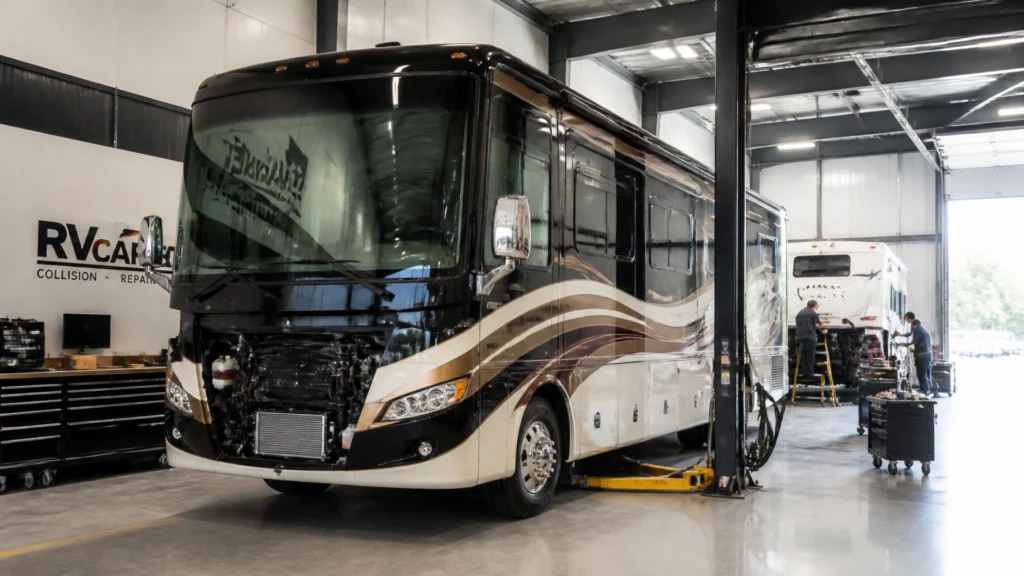
As a family-owned business with 21 years of experience in the Redlands and Inland Empire area, we at RVCCR have seen the landscape of vehicle repair shift dramatically. Whether you are driving a Class A diesel pusher, a versatile Class C, or a high-tech EV, the complexity of modern automotive engineering means that "simple" repairs are rarely simple anymore. For motorhome owners, this complexity is multiplied by the sheer scale of the vehicle, the unique materials used in coach construction, and a global supply chain that is still recalibrating in 2026.
When your motorhome sits in a shop for weeks or even months, it isn’t just a logistical inconvenience; it is a delay in your lifestyle, your scheduled adventures, and your peace of mind. Navigating the intersection of insurance requirements, parts availability, and specialized labor requires a transparent look at why the clock seems to stop the moment your RV enters the service bay.
Understanding these bottlenecks is the first step toward reclaiming your timeline and ensuring your vehicle is restored to factory specifications without unnecessary delays…
1. The Teardown Revelation: Why Hidden Damage is the Great Delayer
One of the most frequent reasons for a delay occurs long after the initial estimate is written — a pattern certified collision shops avoid by following strict teardown procedures . In the industry, we call this the "teardown and discovery" phase. Unlike a standard passenger car, which features a relatively predictable unibody or body-on-frame construction, a motorhome is essentially a sophisticated home built atop a heavy-duty chassis.
When a motorhome is involved in a collision: even a seemingly minor side-swipe: the impact energy travels through layers of fiberglass, luan wood, aluminum framing, and high-density foam insulation. On the surface, you might only see a cracked gel coat or a dangling trim piece. However, once our technicians begin the teardown, we often find:
- Structural Framing Shifts: Aluminum wall studs that have buckled or detached from the floor track.
- Water Intrusion Pathways: Impact damage that has breached the roof seal or window tracks, leading to pre-existing or new rot.
- Wiring Harness Pinching: Electrical lines for slide-outs, leveling jacks, or ADAS sensors that were caught between shifting panels.
In 2026, the rise of composite materials in RV manufacturing has made "patching" almost impossible. To maintain structural integrity and your written lifetime warranty, these layers must be inspected and restored individually. If hidden damage is found, the original repair plan must be scrapped, a "supplement" must be filed with your insurance, and the timeline resets.
2. Realistic Timeline Breakdown by Repair Type
Once teardown confirms the true extent of the damage, the next question is usually the one every owner asks first: "How long is this actually going to take?" The honest answer depends on the repair type, the parts involved, and whether the coach needs structural work, refinishing, or ADAS-related final checks. A fiberglass cap repair does not move through the shop like a roof replacement, and neither of those follows the same production path as a full-body paint and structural job.
Here is a realistic breakdown of common repair timelines in 2026:
| Repair Type | Teardown & Blueprint | Parts Procurement | Structural Repair | Paint & Refinish | Reassembly & Calibration | Total Estimated Timeline |
|---|---|---|---|---|---|---|
| Fiberglass Sidewall (e.g., 8-ft cap replacement, single color) | 2-3 days | 7-14 days | 5-7 days | 3-5 days | 1-2 days | 3-5 weeks |
| Roof Replacement (full RV roof, seal, AC integration) | 3-5 days | 10-21 days | 7-10 days | 4-6 days | 2-3 days | 4-7 weeks |
| Full-Body Paint & Structural (multi-color, multiple panels, ADAS) | 5-7 days | 14-28 days | 10-14 days | 7-10 days | 3-5 days | 6-10 weeks |
A fiberglass sidewall repair often looks straightforward from the outside, but the timeline stretches because the damaged area usually has to be opened up, measured, and matched to the exact cap or sidewall profile. On many motorhomes, replacement fiberglass parts are manufacturer-specific. That means the ordering process is not like sourcing a common car bumper cover. The shop may need coach identification details, VIN confirmation, build photos, or manufacturer approval before the part can even ship. Once it arrives, the structural work itself is specialized but relatively contained, and single-color refinishing is usually more manageable than complex graphics work.
A full roof replacement takes longer in a different way. The teardown phase is more involved because technicians need to inspect sealant lines, roof decking, mounted accessories, edge moldings, and any openings for vents, AC units, antennas, or solar components. Roof parts also tend to create procurement delays because they are large, fragile, and sometimes tied to specific roof construction methods or cut patterns. Even when the base material is available, related components such as seal kits, trim, adhesive systems, and rooftop equipment interfaces can hold up the schedule. The repair itself also cannot be rushed. Roof work has to be dry, sealed correctly, and re-integrated with AC and accessory openings without introducing future leak points.
A full-body paint and structural repair usually carries the longest total timeline because it combines nearly every bottleneck in one job. There may be multiple damaged panels, frame or support repairs, alignment checks, and post-repair calibration requirements. Even if the structural work stays on pace, paint scheduling becomes a major factor. Multi-color motorhomes require extensive masking, color sequencing, flash time, unmasking, and clear application over very large surfaces. Large-format booth time is limited, and a coach can occupy that booth far longer than a passenger vehicle. If ADAS components, cameras, or radar systems are involved, the final reassembly and calibration stage adds another layer that cannot be skipped.
The takeaway is that the "repair" is never just one step. Teardown identifies the true scope. Parts procurement determines whether the work can proceed without interruption. Structural repairs need the right technician and the right materials. Paint work depends on booth access and process control. Final reassembly has to account for fit, finish, water sealing, and electronics. That is why realistic timelines for motorhomes are measured in weeks, not just work orders.
3. How a Repair Estimate Grows: A Worked Insurance-Supplement Example
Insurance estimates usually begin with what can be seen in photos, not with everything that is actually damaged. That is why many owners feel blindsided when the number changes after teardown. In reality, a supplement is not a surprise charge invented by the shop. It is the formal process used to document collision-related damage that was hidden until disassembly began.
Consider a realistic 2022 Class A gas motorhome with front-end impact damage. The coach arrives with visible cracking to the front cap, damage around the grille area, and signs that the bumper assembly and lower trim took the initial hit. Based on exterior photos alone, the insurer writes an initial estimate of $4,200. That estimate covers what is visible at first glance, such as:
- Front cap cosmetic repair area
- Exterior trim pieces
- Basic refinish labor
- Limited R&I labor for visible front-end components
At this stage, the estimate is not necessarily "wrong." It is just incomplete. Once the coach enters teardown, the hidden damage starts to appear.
During disassembly, the technician finds a cracked radar bracket mounted behind the front fascia. That matters because even if the radar sensor itself looks intact, a damaged bracket can change sensor alignment and make the system unreliable. The teardown also reveals a bent aluminum support structure behind the cap. What looked like surface damage is now clearly structural. In addition, there is a pinched wiring harness in the impact zone, which creates risk for intermittent electrical faults if it is simply pushed back into place.
Those findings trigger the first supplement: +$2,800. That supplement typically includes:
- Additional labor for full teardown and documentation
- Replacement or repair of the aluminum support structure
- Radar bracket replacement
- Wiring harness inspection, repair, or partial replacement
- Added materials and hardware not visible during the photo estimate
At that point, the running total moves from $4,200 to $7,000.
The job still is not finished. After structural and component repairs are completed, the front-end driver-assistance system now requires verification and calibration. Because the radar mounting position was affected, the repair cannot be considered complete until the system is checked and calibrated to manufacturer specifications. That creates a second supplement: +$1,200 for calibration-related operations, which may include:
- Calibration setup labor
- Scan procedures before and after repair
- Targeting or aiming procedures
- Road-test verification where required by repair protocol
That brings the final repair total to approximately $8,200.
Here is the progression in simple form:
| Estimate Stage | Amount | Why It Changed |
|---|---|---|
| Initial photo estimate | $4,200 | Visible front-end cosmetic and basic repair items only |
| First supplement | +$2,800 | Hidden damage found during teardown: cracked radar bracket, bent aluminum support structure, wiring harness pinch |
| Second supplement | +$1,200 | Required calibration and post-repair electronic verification |
| Final repair total | ~$8,200 | Complete scope after teardown, structural repair, and calibration |
This example is useful because it shows how supplements actually happen. The first estimate is limited by visibility. The first supplement is triggered by hidden structural and electrical damage. The second supplement is triggered by required calibration after those parts are repaired or replaced. None of this is unusual on a modern motorhome, especially one with front-end electronics, integrated support structures, and molded composite panels.
For owners, the most important point is this: a growing estimate does not automatically mean the shop missed something or is inflating the bill. It often means the vehicle is finally being inspected thoroughly enough to repair it correctly.
4. Parts Lead Times for Common Motorhome Components (2026)
Parts delays deserve their own discussion because they often control the entire production schedule. Auto repair customers are used to relatively fast parts availability for common vehicles, but motorhome parts follow a different supply chain. Large fiberglass pieces, oversized glass, proprietary graphics, and coach-specific interior components do not move through the market the same way standardized passenger-car parts do.
Below is a realistic snapshot of common 2026 motorhome component lead times:
| Component | Typical Lead Time | Sourcing Notes |
|---|---|---|
| Front Fiberglass Cap (Class A) | 10-28 days | Often manufacturer-specific, may require VIN verification |
| Windshield (Class A) | 14-42 days | Requires specialized freight for oversized glass |
| Roof AC Unit | 3-7 days | Generally available through RV parts distributors |
| Slide-Out Mechanism Components | 7-21 days | Assembly-specific, varies by brand and model year |
| Exterior Decals/Graphics Kit | 14-45 days | Must match original production run, often custom ordered |
| Chassis Components (Ford F-53) | 3-14 days | More standardized, available through Ford dealer network |
| Interior Cabinetry Parts | 14-35 days | Proprietary materials and finishes, often model-year specific |
A front fiberglass cap can take time because many manufacturers use model-specific molds and construction details. Before the part is released, the supplier may need VIN verification or build confirmation to avoid shipping the wrong cap. That verification step alone can slow the order compared with a standard automotive parts lookup.
A Class A windshield often takes even longer because the issue is not only inventory. Oversized glass needs specialized handling and freight. Even if the glass is available, transportation and delivery scheduling can add major time, especially when the receiving shop must coordinate unloading and inspection.
A roof AC unit is usually faster because it moves through broader RV distribution channels and is more likely to be stocked by aftermarket or authorized RV parts suppliers. Even then, compatibility with the coach's electrical and roof-opening configuration still needs to be confirmed before install.
Slide-out mechanism components are less predictable. Lead time depends on the exact assembly, brand, and model year. A shop may be able to source common hardware quickly, but tracks, drive components, or synchronization parts often require more specific ordering.
Exterior decals and graphics kits can quietly become one of the longest delays on the job. Matching the original production run, stripe design, scale, and color layout is not always simple. Many kits are effectively custom-ordered, which means production time is built into the lead time.
Chassis components for a Ford F-53 are usually easier to source because they move through a more standardized dealer and service-parts network. That is one reason chassis-related repairs can sometimes move faster than coach-body repairs on the same vehicle.
Interior cabinetry parts are another common slow point. Materials, laminates, edge treatments, and finishes are often proprietary to a model year or floorplan. Even a small damaged panel may require a specific part order rather than a generic substitute.
In 2026, several broader supply conditions make these delays more severe for motorhomes than for passenger vehicles. OEM production cuts reduce available replacement inventory. Four-day work weeks at some suppliers reduce throughput and lengthen replenishment cycles. Specialized freight affects anything oversized, fragile, or irregularly shaped, which describes a large share of RV parts. Passenger-car parts benefit from higher production volume, denser dealer networks, and more mature aftermarket coverage. Motorhome parts do not. That is why a shop can source a common chassis item in days but still wait weeks for a cap, graphics set, or windshield tied to the coach body.
5. Parts Procurement: The 2026 Reality of Lead Times
Data from 2026 indicates that finding affordable, high-quality parts remains the single largest challenge for repair shops, with 46% of facilities naming rising parts prices and 22.8% citing outright shortages as their primary operational bottleneck. For the motorhome owner, this is particularly acute because RV parts are not as standardized as those for a Ford F-150 or a Tesla.
Motorhome manufacturers often use proprietary molds for front and rear caps, custom-sized windows, and specific interior cabinetry that may only have been produced for a single model year. Furthermore, with major OEMs reporting production cuts: sometimes moving from 5-day to 4-day work weeks: the "safety stock" of replacement parts at the factory level has dwindled.
At RVCCR, we mitigate this by leveraging our relationships with multiple OEM suppliers — a key reason why OEM parts matter for motorhome resale value and long-term durability. However, if a part is on backorder, the vehicle often has to wait in a "holding" status. A specialized windshield for a Class A motorhome, for example, might have a six-week lead time because it requires a specialized freight carrier to transport the oversized glass safely to Redlands.

6. The Insurance Supplement "Dance"
Most motorhome owners are surprised to learn that the initial estimate provided by an insurance adjuster is rarely the final cost of the repair. Adjusters often write "visual only" estimates to get the process started. Once the vehicle is at RVCCR and we perform the teardown mentioned in Step 1, we find the "real" damage.
This triggers the "supplement" process. We must document the new damage with high-resolution photography, itemize the additional parts and labor, and submit it to your carrier. In 2026, many insurance companies have moved toward centralized, remote adjusting. This can lead to delays as we wait for a desk adjuster in another state to review the photos or, in complex cases, wait for a field inspector to physically visit our shop to verify the structural damage.
Without approval on the supplement, the shop cannot legally or financially proceed with the additional repairs. This "dance" can add 7 to 14 days to a repair timeline for every round of supplements required.
7. Specialized Skill Requirements and Labor Shortages
The labor market in 2026 remains tight, especially for technicians who possess the "triple threat" of skills required for motorhomes: mechanical proficiency, fiberglass/bodywork expertise, and advanced electrical knowledge. Industry reports show that nearly 24% of shops struggle to find qualified technicians.
A motorhome is not just a vehicle; it’s a machine with plumbing, high-voltage electrical systems (especially in newer EV-hybrid models), and complex hydraulic slide-outs. Repairing a 40-foot fiberglass sidewall is an art form that differs entirely from replacing a steel fender on a sedan. At RVCCR, being RVDA certified means our techs have the specialized training to handle these unique builds, but the high demand for these skills across the Inland Empire means that the best shops often have a "queue" of vehicles waiting for the most senior specialists.
8. Technology and ADAS Calibration
Modern motorhomes are increasingly equipped with Advanced Driver Assistance Systems (ADAS). This includes lane-departure warnings, adaptive cruise control, and 360-degree camera systems. According to 2026 shop data, 30% of facilities struggle to stay current with the diagnostic tools and software updates required to recalibrate these systems.
After a collision repair or even a roof repair that involves removing roof-mounted sensors or cameras, the vehicle must undergo a precise calibration process. If a shop does not have the specific OEM software or the level floor space required for ADAS targets, the vehicle must be sublet to a dealer, adding yet another layer of logistical delay. As a Tesla and Rivian certified shop, RVCCR maintains the high-tech diagnostic equipment on-site, but the calibration process itself is time-consuming and must be performed to exact factory specs to ensure your safety on the road.

9. Paint Booth Scheduling and Size Constraints
Logistics often come down to physical space. A standard auto body shop booth is designed for cars and SUVs. Painting a 40-foot motorhome requires a "Large Format" heated downdraft paint booth. Because these booths are expensive and take up significant real estate, even large facilities may only have one.
The painting process for an RV is a multi-day affair. It involves:
- Masking: A massive undertaking given the surface area and the need to protect awnings, windows, and roof components.
- Priming and Sanding: Ensuring the fiberglass or aluminum surface is perfectly smooth.
- Base Coat and Graphics: Many motorhomes feature 3 to 5 different colors in complex "swoosh" patterns. Each color must be masked, sprayed, and dried individually.
- Clear Coating: Multiple layers of high-solids clear coat to protect the finish from the California sun.
If the paint booth is occupied by another large project, your motorhome must wait its turn. At RVCCR, we manage this through rigorous scheduling, but a single delay in the "prep" phase of one vehicle can ripple through the entire week's production schedule.
10. Communication Breakdowns: The Owner-Shop-Insurer Triangle
Finally, many delays are administrative rather than mechanical. A repair can stall if:
- The owner hasn't signed the "Direction to Pay" or "Authorization to Repair" forms.
- The insurance carrier sent the check to the wrong address or included a lienholder (bank) that needs to endorse the check.
- There is a disagreement between the shop and the insurer regarding the "Prevailing Competitive Labor Rate" or the use of OEM parts versus cheaper aftermarket alternatives.
In 2026, with the RV market seeing a surge in used vehicle demand, many owners are dealing with older warranties or insurance policies that have strict limitations on "Actual Cash Value" repairs. Navigating these nuances requires constant communication, and if any part of that triangle: owner, shop, or insurer: stops responding, the repair stops too.
How to Fix the Delay: Actionable Solutions for Motorhome Owners
While some factors are out of your control, there are several steps you can take to expedite your motorhome's journey through the shop.
Solutions for Hidden Damage & Supplements
- Request a "Pre-Teardown": If your motorhome is still drivable, ask if the shop can perform a preliminary teardown to identify hidden parts needs before you drop it off permanently.
- Photo Documentation: Take your own high-resolution photos of the damage immediately after the accident. Share these with the shop so they can start the parts-ordering conversation with the insurance adjuster early.
Solutions for Parts & Labor Bottlenecks
- Choose a Certified Specialist: Avoid general auto body shops. A shop that is RVDA certified and has a dedicated understanding your rights before filing a motorhome collision claim workflow will have better access to OEM parts and the specific technicians needed for the job.
- Approve OEM Parts Early: If your policy allows for it, insist on OEM parts. While they can sometimes have longer lead times than aftermarket "will-fit" parts, they fit correctly the first time, preventing the "re-work" delays that plague many RV repairs.
Solutions for Communication & Logistics
- Establish a Primary Contact: Ask the shop for a dedicated service advisor. At RVCCR, we prioritize keeping our customers in the loop, but having one person who knows your claim inside and out is invaluable.
- Handle Your Paperwork Immediately: Don't let an unsigned form sit in your inbox. In 2026, digital signatures are standard: use them to keep the administrative momentum going.
- Get a Professional Estimate: Before you even file the claim, get a free estimate from a reputable shop. Having a professional, itemized list of damages helps you hold your insurance carrier accountable for a realistic timeline.

The RVCCR Difference: Why Experience Matters in 2026
At RVCCR, we understand that your motorhome represents more than just a vehicle: it’s your ticket to the open road, a vessel for family memories, and a significant financial investment. Our 21 years in Redlands have taught us that the only way to combat the "Long Repair" syndrome is through meticulous planning, certified expertise, and transparent communication.
We are proud to be a family-owned business that combines the technical rigor of a Fix Auto Network shop with the specialized knowledge of an RVDA-certified repair center. From Tesla and EV-certified structural repairs to complex motorhome paint and bodywork, we handle the entire process under one roof. We coordinate with all major insurance carriers, advocate for the use of OEM parts, and back every repair with a written lifetime warranty.
If your motorhome has suffered damage, don't leave your timeline to chance. Contact the experts who understand the complexities of 2026 vehicle technology and the unique needs of the RV community.
Ready to get back on the road? Visit us at our Redlands facility or contact us today for a free estimate and let our team of certified professionals restore your motorhome to factory specs.
Need a repair estimate?
Skip the wait — send us a few photos and our team will get back to you fast.
Start a Photo Estimate →