EV Collision Battery Coolant System Inspection: Why Your Tesla or EV Needs a Dielectric Test After a Crash
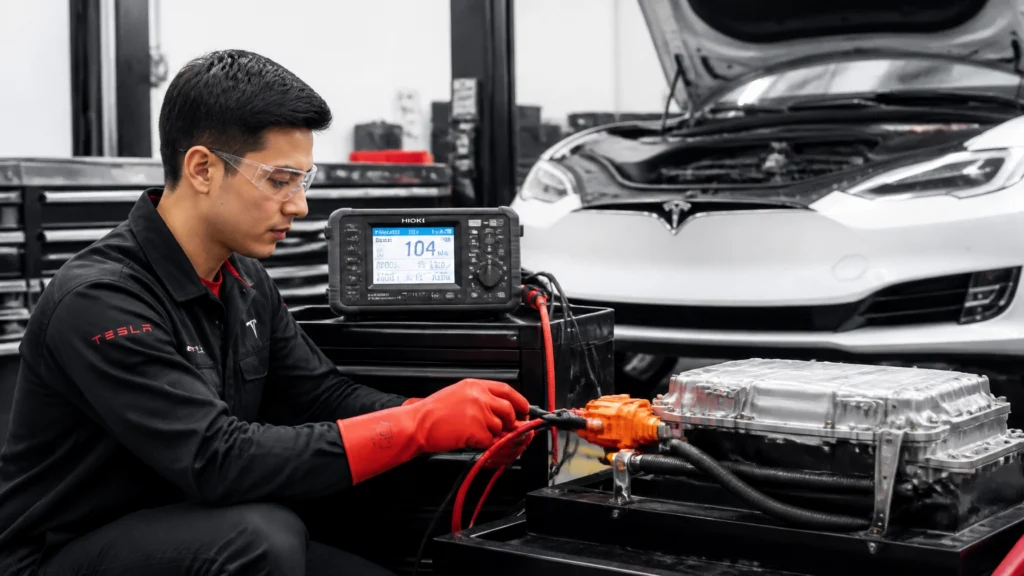
Operating a modern electric vehicle: whether a high-performance Tesla Model Y, a rugged Rivian R1T, or an advanced Ford Mustang Mach-E: requires understanding that high-voltage (HV) architecture is fundamentally integrated with complex fluid dynamics. For 21 years at RVCCR, our family-owned facility has witnessed the evolution of automotive engineering from conventional internal combustion engines to sophisticated lithium-ion battery propulsion systems. When a collision occurs, the immediate visual damage to exterior body panels, bumper covers, and structural aluminum aprons often masks internal vulnerabilities. Among the most critical yet frequently misunderstood post-crash requirements is the inspection, pressure testing, and dielectric insulation resistance verification of the electric vehicle battery coolant system…
The Anatomy of EV Thermal Management: HVAC Loops vs. Battery Thermal Loops
Unlike conventional gasoline-powered automobiles that rely on a single primary radiator loop to cool an internal combustion engine, modern battery electric vehicles (BEVs) utilize multi-zone, highly sophisticated thermal management architectures. Understanding these distinct loops is essential when evaluating collision damage at a dedicated Tesla certified collision center.
1. The Cabin HVAC and Power Electronics Loop
The first primary circuit is dedicated to cabin climate control (heating, ventilation, and air conditioning) as well as power conversion systems (PCS), on-board chargers (OBC), and inverters. This loop typically operates at lower voltage potentials and manages the thermal loads generated by power electronics during rapid acceleration, regenerative braking, and Level 3 DC fast charging. While a breach in this loop results in coolant loss and electronic component overheating, it does not immediately threaten the hermetically sealed high-voltage battery cell modules.
2. The High-Voltage Battery Thermal Management Loop
The second and most critical circuit is the battery thermal management system (BTMS). This closed-loop system circulates specialized ethylene glycol and water mixtures through extruded aluminum cooling plates bonded directly to the battery module housing. These plates maintain uniform cell temperatures, preventing thermal runaway during high-draw discharge and extreme weather conditions. Because these cooling channels snake intimately across and beneath battery modules operating at 400V to 800V+, any compromise to the enclosure integrity or line connections introduces catastrophic risks.
+-------------------------------------------------------------------+
                 EV THERMAL MANAGEMENT ARCHITECTURE
+-------------------------------------------------------------------+
|  [Cabin & Inverter Loop]  --> Lower Voltage Electronics, Cabin    |
|  [Battery Thermal Loop]   --> 400V-800V Battery Packs & Modules     |
+-------------------------------------------------------------------+
When a collision exerts kinetic force on the front aprons, side sills, or rear subframes, kinetic energy transmits directly into these rigid aluminum and rubberized coolant lines. Even minor structural shifts can shear hose fittings, crack plastic or aluminum manifolds, or micro-fracture the perimeter seals of the battery enclosure itself…
How Collision Damage Breaches Coolant Lines and Battery Enclosures
In a conventional collision repair scenario, technicians focus on straightening chassis rails, replacing crumple zones, and matching paint finishes. However, in modern electric vehicle certified auto collision repair, structural deformation creates unique secondary failure modes.

When a vehicle absorbs impact energy, chassis members flex momentarily beyond their elastic limit. Because high-voltage cooling lines are routed tightly along structural rails to protect them from road debris, they are exceptionally vulnerable to pinch points, shear forces, and compressive loading.
- Hose and Fitting Fractures: Quick-connect plastic fittings and O-ring seals located near front-end crash structures frequently crack under moderate front impacts.
- Aluminum Line Kinking: Rigid hard-lines running along the battery pack side rails can kink, restricting flow and creating localized pressure spikes that rupture weak points.
- Battery Enclosure Ingress: If a side-impact intrusion deforms the floor pan or lower rocker panel, the outer casing of the lithium-ion battery pack can buckle. When the casing buckles, internal or external cooling channels can shear directly over live busbars or module terminals.
Without specialized diagnostic equipment, these micro-breaches remain invisible to the naked eye, silently setting the stage for electrical shorts and dangerous thermal events weeks after the vehicle is returned to service…
The Dielectric Testing Protocol: Insulation Resistance and Megohmmeter Procedures
A common misconception among vehicle owners and non-certified body shops is that EV coolant is completely non-conductive ("dielectric"). In reality, original equipment manufacturers (OEMs) such as Tesla, Rivian, and Ford specify standard water-glycol coolant mixtures (typically a 50/50 ratio) that possess non-zero electrical conductivity.
When this coolant leaks onto high-voltage electrical connections, it drastically lowers the insulation resistance between the high-voltage circuit and the vehicle chassis. To verify safety, certified technicians must execute a rigorous dielectric insulation resistance test using a calibrated digital insulation tester (megohmmeter).
Step-by-Step Insulation Testing Protocol
- De-Energization & Safety Interlock Verification: Technicians follow strict OEM protocols to disconnect the high-voltage service disconnect and verify zero potential across HV terminals using CAT III/IV multimeters.
- Visual & Endoscope Inspection: Cooling manifolds, heater cores, and compressor connections are inspected for crystallized residue, chalky white deposits, or wet staining indicating slow leaks.
- Component Isolation Testing: Using a megohmmeter set to specific DC test voltages (500 VDC for main HV battery circuits and 400V components; 250 VDC for sensitive accessories like the electric AC compressor and PTC cabin heater to prevent dielectric breakdown of internal components), technicians measure resistance between B+ / B- and chassis ground.
- Interpreting Thresholds: For Tesla systems, a BMS isolation reading dropping below 3,000 kΩ (3 MΩ) with contactors open indicates an internal fault requiring pack-level evaluation. For individual components like the battery coolant heater, any insulation resistance reading falling below 18 MΩ mandates immediate replacement…
Signs of Coolant Ingress: BMS Fault Codes, Isolation Faults, and Thermal Runaway Risk
When coolant breaches the battery enclosure or HV electrical connectors, the Battery Management System (BMS) immediately detects the anomaly. Ignoring these warning signs puts the vehicle and its occupants at severe risk.

Key Diagnostic Indicators of Coolant Contamination
- Isolation Fault Alerts: Dashboard warnings indicating "High Voltage Isolation Fault" or "Service Required: Electrical System Warning."
- BMS Diagnostic Trouble Codes (DTCs): Specific fault codes generated when insulation resistance drops below manufacturer-specified safety thresholds.
- Unexplained Coolant Reservoir Level Drop: Persistent loss of coolant without external puddles under the vehicle, indicating internal weeping into sealed enclosures.
- Thermal Runaway Risk: If conductive coolant bridges positive and negative terminals inside a battery module, uncontrolled current flow can initiate localized overheating, off-gassing, and catastrophic thermal runaway…
Because these symptoms require immediate, specialized intervention, vehicle owners searching for an ev repair shop near me must ensure the facility possesses direct diagnostic subscriptions and OEM-approved testing gear…
Specific Inspection Procedures: Tesla vs. Rivian vs. Ford EV Cooling Systems
Every manufacturer implements distinct engineering standards for thermal management, requiring tailored post-collision inspection methodologies.
Tesla Repair Protocols
Tesla service procedures strictly dictate that if an internal battery coolant leak is suspected, technicians must NOT pressurize the battery cooling system. Doing so forces conductive fluid deeper into cell groupings. Instead, technicians rely on BMS isolation telemetry, low-pressure pneumatic testing on auxiliary loops (such as the Power Conversion System circuit tested at controlled PSI parameters), and precise megohmmeter isolation sweeps.
Rivian Adventure Vehicle Protocols
Rivian's skateboard architecture integrates massive structural battery packs with high-flow cooling channels designed for heavy off-road utility. Post-collision inspections at a certified facility require removing protective underbody armor shields to inspect complex quick-disconnect coolant fittings situated near the motor inverter units and front crush cans.
Ford Mustang Mach-E & F-150 Lightning Protocols
Ford’s electrified truck and crossover platforms utilize sophisticated chiller units and active thermal control valves. Certified collision technicians must perform diagnostic module scans using Ford’s proprietary FDRS software to command active coolant pump tests while monitoring pressure decay sensors and thermal sensor feedback loops…
The Cost of Comprehensive Coolant System Service and Dielectric Testing
Restoring an electric vehicle to factory safety specifications after a collision is a meticulous process requiring advanced tooling, specialized training, and certified parts.
| Service Procedure | Typical Cost Range | Scope & Requirements |
|---|---|---|
| Complete Coolant Loop Pressure Test | $150 – $350 | Visual check, pneumatic pressure stabilization test, manifold inspection |
| Full Dielectric Insulation Resistance Test | $250 – $500 | Megohmmeter testing at 250V/500V across all HV circuits and accessories |
| Coolant Flush, Evacuation & Vacuum Fill | $300 – $600 | Specialized coolant evacuation machine, OEM fluid replacement, air purging |
| Comprehensive EV Post-Collision Package | $400 – $1,200+ | Combined diagnostic scan, isolation testing, pressure testing, and documentation |
Investing in professional verification protects your vehicle's structural integrity, preserves factory warranties, and ensures absolute safety on the road…
Why Generic Repair Shops Cannot Perform This Inspection
Many traditional body shops attempt to repair structural EV damage without specialized training, risking catastrophic electrical failures. True EV restoration requires:
- OEM Certifications: Training from manufacturers verifying technicians understand high-voltage safety and diagnostic software.
- Specialized Diagnostic Tooling: High-end insulation testers, vacuum coolant refill stations, and manufacturer diagnostic subscriptions.
- Written Lifetime Warranties: Backing every repair with absolute accountability and transparent documentation…
Secure Factory-Certified Restoration Today
When your electric vehicle suffers collision damage, you cannot afford to leave its high-voltage safety systems to chance. At RVCCR, our factory-certified technicians combine 21 years of family-owned craftsmanship with cutting-edge EV diagnostic technology to restore your vehicle to pristine factory specifications. From precise dielectric insulation testing to flawless structural realignment, we handle every detail with uncompromising precision.
Do not compromise on safety or performance. Contact our team today to schedule your comprehensive evaluation and request a free estimate…

Need a repair estimate?
Skip the wait — send us a few photos and our team will get back to you fast.
Start a Photo Estimate →