Fiberglass vs. Aluminum RV Sidewall Repair: Aluminum Panel Replacement vs. Laminated Composite Restoration
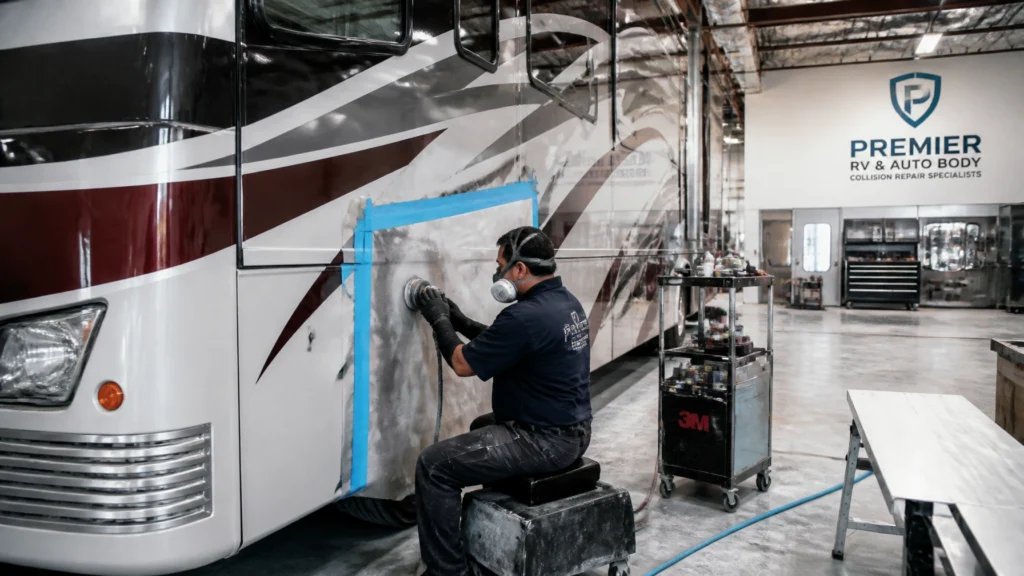
Operating with a 21-year family-owned heritage as a certified collision, paint, and mechanical repair center, RVCCR has evaluated and restored thousands of recreational vehicles, travel trailers, fifth wheels, and motorhomes across the Inland Empire. When an RV sustains impact damage: whether from a highway collision, a low-hanging branch, or a campsite maneuvering mishap: the exterior sidewall represents the primary structural and aesthetic envelope. Understanding how different exterior materials react to impact, moisture, and stress is essential for determining whether a sidewall can be repaired through targeted patching, panel replacement, or whether it requires a comprehensive structural rebuild…
1. The Anatomy of RV Sidewalls: Laminated Composite vs. Hung Metal Construction
Before undertaking any collision restoration or insurance claim settlement, an experienced rv collision repair specialist must identify the exact manufacturing architecture of the coach. Recreational vehicle sidewalls generally fall into three distinct construction categories:
Laminated Fiberglass "Sandwich" Walls
Commonly found on modern mid-to-high-end travel trailers, fifth wheels, and Class A/C motorhomes, laminated sandwich walls are engineered for maximum rigidity and thermal efficiency.
- The Construction: A multi-layered composite consisting of an exterior gelcoat fiberglass skin, a rigid backing layer (typically luan or Azdel composite), an insulating core (high-density block foam or expanded polystyrene), and an interior decorative wallboard.
- The Bonding Process: These layers are fused together under industrial vacuum-bonding presses or heavy pinch rollers using structural adhesives.
- The Structural Implication: The skin and core act as a unified structural membrane. Unlike traditional framed walls where studs carry the load, the lamination itself provides significant shear strength and resistance to racking.
Hung Fiberglass Walls
Hung walls utilize a fiberglass exterior sheet, but the underlying engineering differs fundamentally from a laminated sandwich.
- The Construction: A single sheet of fiberglass skin hung over a traditional framed skeleton (either aluminum tubing or laminated wood studs) with batt insulation filling the wall cavities.
- The Structural Implication: The exterior fiberglass is non-structural; it serves primarily as a weather shield and cosmetic skin, relying entirely on the internal stud framework to maintain rigidity.
Corrugated Aluminum Siding
Prevalent on traditional travel trailers, utility haulers, and vintage units, aluminum siding operates on time-tested construction principles.
- The Construction: Individual interlocking corrugated aluminum sheets mechanically fastened with screws or rivets to vertical wall studs.
- The Structural Implication: The metal skin is entirely non-structural. The internal wooden or aluminum framing absorbs all vertical and horizontal loads, while the aluminum panels protect against weather and minor abrasions.
2. Collision Damage Mechanics: Fiberglass Cracking vs. Aluminum Denting
When a vehicle suffers an impact, the energy transfer creates radically different failure modes depending on whether the sidewall is fiberglass composite or aluminum sheet metal.

Fiberglass Impact Dynamics
Because laminated fiberglass sandwich walls are rigid and brittle under point loads, a sharp impact does not simply dent the surface. Instead, it typically results in:
- Gelcoat Fractures and Spiderwebs: Micro-cracking across the resin surface that admits moisture into the substrate.
- Core Crushing: The underlying foam or luan backing compresses, creating a localized void or soft spot behind the fiberglass skin.
- Shear Failure (Delamination Initiation): The force breaks the chemical or mechanical bond between the outer fiberglass skin and the inner core, creating an invisible pocket where future water intrusion will separate the layers entirely.
Aluminum Impact Dynamics
Corrugated aluminum behaves with ductile elasticity up to its yield point, meaning collision energy manifests differently:
- Creeching and Creasing: Aluminum panels absorb impact by bending, folding, or tearing rather than fracturing invisibly.
- Frame Transmission: While the aluminum skin dents easily, the underlying wooden or metal studs absorb the kinetic shock. A superficial dent in the skin frequently masks compromised framing studs directly behind the impact zone.
3. The Damage Assessment Protocol: Tapping, Squareness, and Moisture Testing
Restoring an RV sidewall to factory specifications requires a rigorous, multi-point inspection methodology before any estimates are finalized or insurance supplements are submitted.
The Audible Tap Test
Technicians use a specialized tapping mallet or acoustic wand across the fiberglass or aluminum surface. A solidly bonded laminated wall produces a crisp, high-pitched acoustic response. When the fiberglass skin has separated from the core (delamination) or when internal rot has hollowed out the backing, the sound shifts to a dull, low-pitched thud. Mapping these acoustic variances allows our certified estimators to delineate the exact boundary of hidden damage.
Frame Squareness and Structural Laser Measurement
For motorhomes and large fifth wheels, impact forces often twist the chassis or sidewall framing out of square. Technicians utilize laser alignment and plumb bobs to measure diagonal chassis dimensions. If the underlying aluminum or steel skeletal structure is racked, repairing or replacing exterior skins without correcting the frame will cause premature seam failure, window binding, and persistent roof leaks.
Interior Integrity and Moisture Metering
Because water intrusion is the primary enemy of RV structural longevity, every collision assessment includes high-frequency dielectric moisture meter scans of the interior wallboards. If moisture is detected behind a punctured fiberglass skin or dented aluminum panel, the repair scope must expand to include core replacement, mold remediation, and anti-fungal treatments before exterior panels are re-secured. For comprehensive insights into structural evaluations, review our detailed guide on travel trailer collision repair.
4. Repair Thresholds and Techniques: When to Patch, When to Replace
Determining whether to perform local cosmetic repairs, sectional panel replacements, or full wall reconstruction depends on strict engineering thresholds.

Fiberglass Repair Thresholds
- Minor Scrapes and Surface Crazing: If the gelcoat is scratched but the underlying laminate is sound and dry, technicians grind out the affected resin, apply a compatible structural fiberglass filler, feather the edges, and spray custom-blended gelcoat or automotive-grade urethane paint.
- Moderate Cracks and Core Crushing: When impact cracks exceed several inches or crushing is detected, technicians cut away the damaged outer fiberglass skin, rout out the crushed foam or rotted luan core, bond a new core insert into place, and lay down new woven fiberglass cloth infused with marine-grade epoxy resin.
- Widespread Delamination or Structural Fractures: If delamination covers more than twenty percent of a sidewall panel, or if structural framing is compromised across multiple bays, patching is no longer viable. The facility must execute a full sidewall panel replacement, unbolting trim, disconnecting electrical harnesses, hoisting the damaged wall assembly away, and vacuum-bonding a brand-new factory-spec composite wall into place.
Aluminum Repair Thresholds
- Minor Dents and Creases: Because individual aluminum panels are mechanically fastened, local cosmetic dents can sometimes be repaired using specialized stud welders and pulling tools, though matching the factory corrugation profile precisely is critical.
- Severe Creasing, Tears, or Punctures: Aluminum panels cannot be patched effectively with body filler due to thermal expansion differentials between metal and filler. When an aluminum panel is torn or deeply creased, technicians unfasten the damaged section from the corner trim and belt lines, inspect and sister any damaged wooden framing studs behind it, install fresh batt insulation, and rivet a brand-new, pre-painted aluminum skin into position with butyl tape and premium urethane sealants.
5. Paint Matching, Gelcoat Refinishing, and Surface Challenges
Restoring an RV sidewall to pre-loss condition involves overcoming distinct chemical and aesthetic hurdles.
Fiberglass Gelcoat and Paint Challenges
Fiberglass substrates are porous and sensitive to UV degradation over time. When matching paint or gelcoat on a fiberglass sidewall:
- Color Metamerism: Spectrophotometric readings must be taken in controlled lighting to account for sun-faded factory pigments.
- Pinholing and Outgassing: During fiberglass layup and resin curing, microscopic air bubbles can form if humidity and temperature are not strictly regulated within our downdraft paint booths. Proper priming and sealing prevent pinholes from ruining the final gloss finish.
Aluminum Oxidation and Adhesion Challenges
Aluminum surfaces naturally form a microscopic aluminum oxide layer upon exposure to air. If this oxide layer is not meticulously chemically cleaned, etched, and primed using self-etching epoxy primers, topcoat paint will flake and peel within months. Specialized surface preparation ensures permanent paint adhesion across every corrugated rib and flat accent stripe.
6. Navigating Insurance Claims and Restoring Your Mobile Lifestyle
Dealing with insurance adjusters after an RV collision can be daunting, particularly when hidden structural damage, core rot, or complex composite lamination costs are disputed. Partnering with an established facility that maintains direct communication with all major insurance carriers ensures that supplemental damage claims: such as discovering crushed foam core during teardown: are fully documented, photographed, and approved before work proceeds. For complete mechanical, electrical, and body restoration under one roof, explore our specialized rv repair services designed to streamline your claim from estimate to final delivery.

Experience Certified Excellence with RVCCR
Whether your motorhome requires delicate gelcoat restoration on a laminated fiberglass sidewall or precise aluminum panel replacement on a travel trailer, professional expertise makes all the difference between a temporary patch and a lifetime-guaranteed repair. Backed by a written lifetime warranty, our certified technicians combine decades of collision mastery with state-of-the-art facility equipment to restore your coach to uncompromising factory specifications.
Do not let structural sidewall damage keep you grounded. Contact RVCCR today for your free estimate, let our experienced team manage your insurance claim seamlessly, and get back to enjoying the open road with total confidence and peace of mind!
Need a repair estimate?
Skip the wait — send us a few photos and our team will get back to you fast.
Start a Photo Estimate →