Looking For a Tesla Certified Collision Center? Here Are 10 Things You Should Know
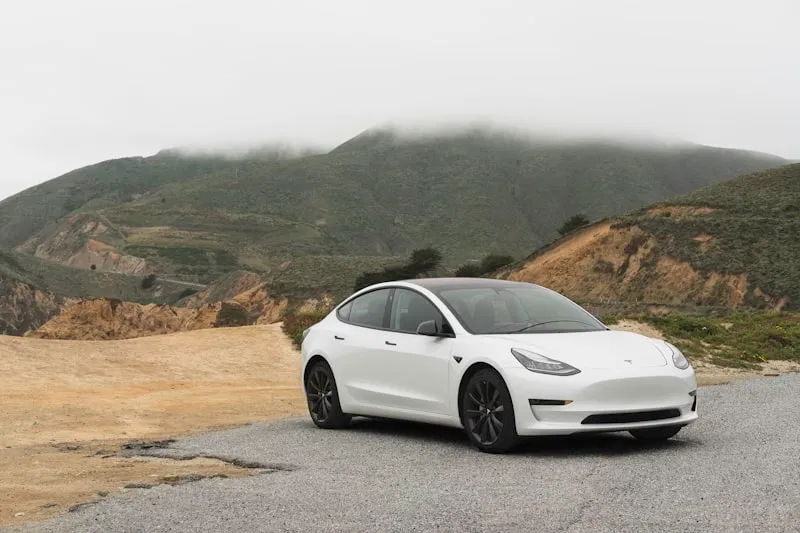
Finding a specialized shop after an accident in the Inland Empire shouldn't feel like a second collision. When you’re driving a vehicle as advanced as a Tesla, the repair process shifts from traditional "hammer and dolly" bodywork to high-stakes aerospace engineering. Tesla vehicles are fundamentally different from internal combustion engine (ICE) cars, utilizing aluminum-intensive structures, complex giga-castings, and a sophisticated sensor suite that requires surgical precision to recalibrate.
If you are searching for a tesla body shop inland empire provides, you aren't just looking for someone who can match the paint; you are looking for a facility that has invested six figures in specialized tooling and thousands of hours in technician training to meet the Tesla Approved Collision Center (TACC) standards. The safety of your vehicle’s Autopilot and Full Self-Driving (FSD) systems, as well as the structural integrity of the battery's protective cage, depends entirely on the shop’s adherence to the Tesla Body Repair Program (TBRP).
At RVCCR, we understand that your Tesla is more than a car, it’s a high-performance computer on wheels. As a certified facility serving Redlands and the surrounding Inland Empire, we have aligned our operations with the strict 2026 Tesla Operating Standards to ensure every Model 3, Model Y, Model S, and Model X is restored to factory specifications…
1. Verify the "Tesla Approved" Status Directly
The first and most critical step is verifying that the shop is an official member of the Tesla Approved Collision Center (TACC) network. Many shops claim to be "EV specialists" or "certified" in a general sense, but Tesla maintains a closed ecosystem for its structural repair data and restricted parts.
To be a tesla certified collision center, a shop must pass a rigorous site validation by Tesla’s onboarding team. This includes a virtual tour of the facility and an on-site audit of their equipment. Tesla owners should always verify a shop’s credentials through the official Tesla find-us map or by asking to see their current Tesla certification credentials. Without this, the shop may not have access to Toolbox 3, Tesla’s proprietary diagnostic software, which is required to clear crash codes and recalibrate the vehicle’s safety systems.
2. Specialized Tooling is Non-Negotiable
You cannot repair a Tesla with standard body shop tools. Tesla’s 2026 tooling list mandates specific equipment that many general shops simply don't own. For example, Tesla requires the use of approved structural repair benches, such as those from Celette or Car-O-Liner, which use dedicated "fixtures" or "jigs" to hold the vehicle's frame in place with millimeter accuracy.
Beyond the frame bench, look for:
- Aluminum Welders: Tesla specifies specific MIG/MAG welders (like the Fronius TPS 270i) that can handle the unique properties of aluminum without creating "heat-affected zones" that weaken the metal.
- Rivet Bonding Tools: Much of a Tesla is held together by structural adhesives and specialized rivets (Self-Piercing Rivets or SPRs). Shops must use approved rivet guns, like the Pro-Spot i5, to ensure the bond strength matches the factory assembly.
- Dust Extraction: Because aluminum dust is explosive and can contaminate steel welding, a certified shop must have a dedicated aluminum repair station with its own vacuum and air filtration system.

Alt Text: A Tesla sedan in a certified repair bay with ADAS calibration targets positioned around it, illustrating the precise sensor and camera setup required after collision repair.
3. I-CAR Aluminum Welding Certification
Aluminum does not behave like steel. It has "work-hardening" properties and a much higher thermal conductivity. If a technician treats a Model S fender like a Ford F-150 steel fender, they could inadvertently make the metal brittle.
Tesla mandates that at least two technicians per certified shop hold current I-CAR Aluminum Welding (WCA03) and Steel Welding (WCS03) certifications. These must be renewed every three years. When vetting an ev repair shop near me, ask if their lead technicians have completed the Tesla-specific virtual training modules and if their welding credentials are up to date. At RVCCR, we prioritize this ongoing education because the structural safety of an EV relies on the integrity of every weld and bond.
That matters in practical ways most drivers never see. Aluminum reacts differently to heat input, contamination, fit-up, and finishing. A shop can have general body experience and still fall short on Tesla-grade structural work if the technician is not current on aluminum-specific joining methods. Improper weld setup, poor shielding gas coverage, or contamination from steel dust can all compromise the final repair. On a modern EV, that is not a cosmetic issue. It is a repair-quality issue that affects long-term durability, corrosion resistance, and crash performance.
Certification also signals a process standard, not just a badge on a wall. Shops handling Tesla repairs need disciplined separation between aluminum and steel work areas, approved consumables, proper extraction, and technicians who understand when a part is repairable and when Tesla procedure requires replacement. If a shop gives vague answers about aluminum capability, that is a red flag. A qualified team should be able to explain their repair environment, their equipment, and how they prevent cross-contamination without dancing around the details.

Alt Text: Tesla Approved Collision Center certification signage alongside I-CAR and OEM credentials at RVCCR, demonstrating verified EV repair certifications.
4. Access to Restricted OEM Parts
Tesla does not sell structural parts to non-certified shops. If your repair involves the frame rails, the B-pillar, or the battery support structure, a non-certified shop will literally be unable to order the necessary components from Tesla.
By choosing a tesla certified collision center, you ensure that only 100% new, Original Equipment Manufacturer (OEM) parts are used. Tesla’s Operating Standards for 2026 explicitly forbid the use of used, recycled, or aftermarket parts for collision repairs. This isn't just about aesthetics; it's about the "crush zones" performing exactly as engineered in a secondary accident. Using an aftermarket bumper or a salvaged structural rail can alter how the vehicle's sensors perceive an impact, potentially delaying airbag deployment.
5. Software Diagnostics and Sensor Recalibration
A modern Tesla is equipped with eight cameras, a powerful on-board computer, and various ultrasonic sensors (in older models). Even a minor "fender bender" can knock these cameras out of alignment.
A certified tesla body shop inland empire location will use Tesla Toolbox 3 to perform:
- Pre-Repair Scans: To identify hidden faults in the high-voltage system or pyro-fuses.
- Post-Repair Scans: To ensure all systems are communicating correctly.
- ADAS Calibration: The "Advanced Driver Assistance Systems" (Autopilot) must be recalibrated so the cameras "see" the lanes and obstacles correctly. If the pitch or yaw of a camera is off by just a fraction of a degree, the car could steer incorrectly.
6. High-Voltage Battery Safety Protocols
Safety is the paramount concern when an EV is in a collision center. Tesla vehicles use a massive Lithium-Ion battery pack that must be handled with extreme care. Certified shops are trained in "LV/HV" (Low Voltage/High Voltage) shutdown procedures.
If a Tesla needs to go into a paint booth, for instance, the shop must ensure the temperature does not exceed Tesla’s specified limits (typically 140°F for no more than two hours), as excessive heat can degrade the battery cells. A non-certified shop might "bake" the paint at temperatures that are standard for ICE vehicles but dangerous for a Tesla battery.
7. Understanding Giga-Castings in Repair
If you drive a newer Model Y or Model 3, your car likely features "Giga-castings", large, single-piece aluminum castings that replace dozens of smaller stamped parts. These castings provide incredible rigidity and safety, but they require a completely different repair philosophy.
You cannot "pull" a giga-casting back into shape on a frame machine. If a casting is cracked or deformed beyond very strict tolerances, it must be replaced as a whole unit using Tesla-approved procedures. A certified shop knows how to measure these castings using 3D measuring systems to determine if the vehicle is repairable or if the casting has been compromised.
That distinction matters because giga-castings change how damage is evaluated from the very beginning of the estimate. On an older unibody design, a shop might section, straighten, or replace smaller individual pieces. With a cast rear or front structure, the repair path can become more binary: the casting either remains within Tesla’s allowable limits, or it does not. That affects parts planning, labor operations, repair time, and insurance documentation. It also means the shop needs the correct fixturing and measurement discipline before making promises about turnaround.
This is one area where EV collision repair becomes much less intuitive for consumers. Exterior damage can look moderate while the underlying structural picture is far more serious. A bumper cover, quarter panel, or rear body panel may hide a compromised cast structure underneath. That is why teardown and blueprinting are so important on Teslas. A shop that understands giga-castings will not rush to write a surface-level estimate. They will document the full repair path, verify structural dimensions, and confirm whether Tesla procedure calls for replacement, bonding, sectioning of adjacent components, or additional calibration steps after the structural work is complete.
There is also a cost conversation here that good shops should handle directly and clearly. Giga-casting-related repairs can become expensive not because someone is inflating the ticket, but because the vehicle architecture is different. The parts are specialized, the measurement standards are tighter, and the repair process often includes more setup, more documentation, and more post-repair validation than conventional collision work. Drivers deserve a straightforward explanation of that reality before repairs begin…

Alt Text: A Tesla structural repair process on a frame bench with fixturing equipment, illustrating the precision required when evaluating and repairing giga-casting-related collision damage.
8. Structural Adhesive and Rivet-Bonding Techniques
Tesla’s assembly process is often referred to as "cold joining." Instead of traditional spot welding, which can weaken aluminum, Tesla uses high-strength structural adhesives in combination with rivets.
This "glue and screw" method requires:
- Clean Room Conditions: Adhesives won't bond correctly if there is oil or steel dust in the air.
- Curing Times: The shop must allow specific times for the adhesive to bond before the vehicle is moved or put under stress.
- Specific Rivet Mandrels: Using the wrong rivet can lead to galvanic corrosion (where the metal literally eats itself over time).
9. Navigating Insurance in the Inland Empire
Tesla insurance and other major carriers (AAA, State Farm, Geico, etc.) have specific workflows for EV claims. Because Tesla repairs often require more "labor hours" due to the complexity of the tech, you need a shop that knows how to document the repair process for the insurance adjuster.
A certified auto collision repair facility like RVCCR coordinates directly with your insurance provider to provide detailed "blueprinting", a process where the car is fully disassembled to find every hidden bit of damage before the estimate is finalized. This prevents "supplement" delays mid-repair, getting you back on the road faster.
It also helps set expectations early. One of the biggest frustrations Tesla owners face is the gap between an initial visual estimate and the real scope discovered after teardown. On EVs, hidden damage can involve brackets, mounts, sensors, harnesses, cooling components, undertrays, and structural pieces that simply are not visible until the vehicle is disassembled. If that work is not documented clearly at the front end, the claim can stall while the shop and carrier go back and forth on supplements.
A strong repairer does more than submit a number to the insurer. They build a file. That includes photos, scan results when applicable, parts documentation, structural measurements, OEM procedure references, and a line-by-line explanation of why specific operations are required. When a carrier sees organized documentation tied to the actual repair, the process usually moves more smoothly than when a shop sends a vague estimate and tries to argue details later.
This matters even more on Tesla repairs because insurers may be reviewing labor operations that are unfamiliar to conventional collision workflows. Calibration setup, high-voltage safety steps, dedicated aluminum procedures, corrosion protection steps, and extended teardown time can all be legitimate parts of the repair. A shop experienced with EV claims knows how to explain those operations in a way that keeps the file moving instead of creating avoidable delays.
Owners should also understand that "insurance-approved" and "properly repaired" are not always the same conversation. Your policy may have processes, preferred vendors, or documentation requirements, but the vehicle still needs to be repaired according to the manufacturer’s procedures. A good shop helps bridge that gap. They communicate with the carrier, keep the customer updated, and explain where timing depends on parts availability, supplement approvals, or additional findings during repair. In a market like the Inland Empire, where people rely heavily on their vehicles every day, that kind of communication is not a luxury. It is part of the service.
If you are comparing shops, ask how they handle supplements, who communicates with the adjuster, how often they update customers, and whether they blueprint the car before locking in the plan. Those questions will tell you a lot about whether the shop is built for modern EV claims or still trying to force Tesla repairs into a traditional collision workflow.
10. The Written Lifetime Warranty
The final thing you should look for is a written lifetime warranty. A certified shop that follows Tesla’s 2026 Operating Standards should have enough confidence in their work to back it up for as long as you own the vehicle. This warranty should cover not just the paint finish, but the structural integrity of the repairs and the functionality of the recalibrated sensors.
At RVCCR, we back every Tesla repair with a written lifetime warranty. We believe that if a car is restored using OEM parts, Tesla-approved tools, and certified technicians, it should perform exactly as it did the day it left the Fremont factory.
Questions You Should Ask Your Tesla Repair Provider
Before you drop off your key card, ask these five questions to ensure you’re in the right place:
- "Can you show me your current Tesla Approved Collision Center certification?"
- "Do you have a Celette or Car-O-Liner bench with Tesla-specific fixtures?"
- "Will you be using Tesla Toolbox 3 for my ADAS recalibration?"
- "Do you have a dedicated clean room or area for aluminum repairs?"
- "Are your technicians I-CAR WCA03 certified?"
Those five questions are the starting point, not the entire conversation. If you want a clearer picture of how the shop actually operates, keep going:
6. "What is your process for blueprinting the vehicle before repairs are finalized?"
7. "How do you document supplements and communicate with my insurance company?"
8. "If my Tesla has structural damage, how do you determine whether a component can be repaired or must be replaced?"
9. "What post-repair calibrations, scans, or validation steps will be completed before delivery?"
10. "How will you keep me updated if parts, approvals, or hidden damage affect the timeline?"
These follow-up questions help separate a truly qualified Tesla repair facility from a shop that only knows the marketing language. A confident team should be able to answer them in plain English. You are not asking for trade secrets. You are asking how they protect your vehicle’s safety systems, structural integrity, and repair timeline.
Pay attention to how specific the answers are. Good answers usually sound organized and procedural. Weak answers tend to be vague, defensive, or overly casual. If someone says, "We’ve been doing this a long time," but cannot explain their calibration process, structural measuring approach, or insurance communication workflow, that experience may not translate into modern Tesla collision repair.
It is also fair to ask what happens after the visible body work is done. Many owners assume the hard part is over when the panels are straight and the paint looks right. On a Tesla, that is only part of the finish line. Final quality checks should include scan verification, calibration where required, inspection of panel fit and finish, and confirmation that repair procedures were completed correctly before the vehicle is returned to service.
If the answer to any of these is "no" or "we use a different system that’s just as good," you should consider looking elsewhere. Tesla’s engineering is too specific for "universal" solutions.
The Road Ahead…
The moments following a collision are filled with stress and logistics, but choosing the right repair partner can change the trajectory of your experience. Your Tesla was designed to provide you with years of sustainable, high-performance adventure. Ensuring it is repaired by a certified team means you aren't just fixing a car; you’re restoring your peace of mind and the safety of your family.
Don’t settle for a shop that "thinks" they can handle a Tesla. Trust the certified experts who have the tools, the training, and the passion to do it right.
Call us today to schedule your estimate and let's get your Tesla back to factory-spec perfection.
Need a repair estimate?
Skip the wait — send us a few photos and our team will get back to you fast.
Start a Photo Estimate →