RV Total Loss After a Collision: How Insurance Valuations Work and How to Protect Your Investment
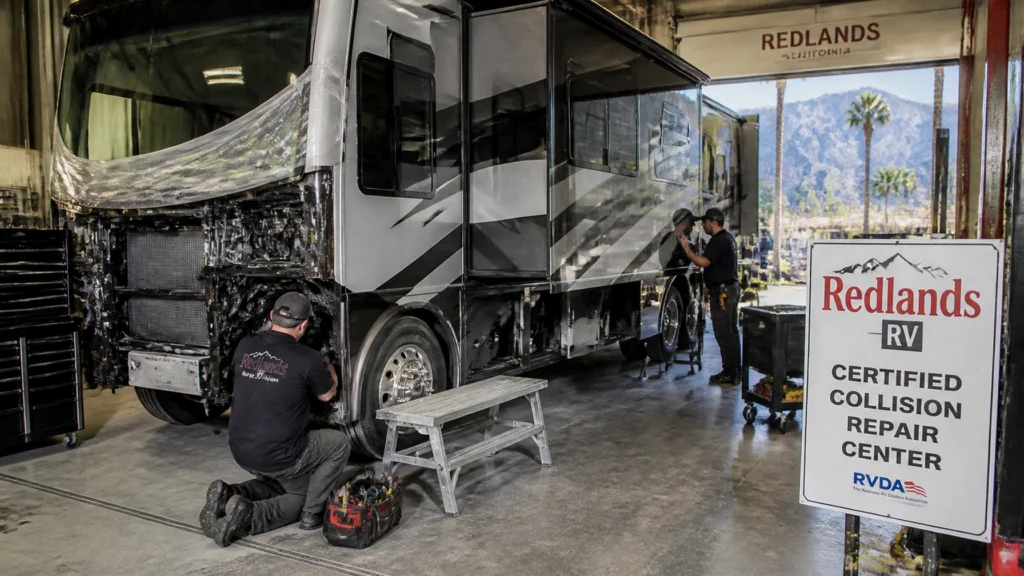
Navigating the aftermath of a major motorhome or travel trailer collision involves complex logistics, specialized technical assessments, and intricate insurance negotiations. With family-owned operations spanning 21 years of service in Redlands and the Inland Empire, RVCCR has guided countless vehicle and RV owners through the stressful transition from accident scene to full restoration or fair insurance settlement. When an impact is severe enough to compromise a vehicle's structural integrity, the question of whether the unit can be repaired or whether it will be declared a total loss becomes the central focus of the claim. Understanding how insurance carriers calculate actual cash value, how total loss thresholds function across different jurisdictions, and what documentation is required to protect your investment is essential for every motorhome and travel trailer owner…
The Complex Realities of RV Collision Damage and Structural Integrity
Unlike standard passenger automobiles, which rely on unibody steel construction or modular bolt-on panels, modern recreational vehicles: ranging from Class A diesel pushers and Class C motorhomes to fifth wheels, travel trailers, and toy haulers: utilize highly specialized building techniques. These include welded aluminum cages, laminated fiberglass sidewalls, vacuum-bonded composite roofs, and heavy-duty steel ladder frames or custom chassis platforms from manufacturers like Freightliner, Spartan, Ford, and Ram.
When a collision occurs, the kinetic energy of the impact does not simply dent a metal fender; it travels through the structural framing, stressing fiberglass laminates, shifting slide-out mechanisms, cracking interior cabinetry, and warping plumbing lines. Assessing these multi-layered systems requires specialized expertise, precise measurement tools, and comprehensive teardowns. For vehicle owners dealing with these severe incidents, partnering with an experienced RV repair facility that holds industry credentials ensures that every hidden point of damage is thoroughly documented before insurance adjusters make preliminary determinations.
Furthermore, the scale and complexity of RV repairs create unique financial dynamics. Because labor hours for specialized fiberglass fabrication, custom cabinetry alignment, and roof membrane reconstruction are significantly higher than standard auto body work, repair estimates can escalate rapidly. This financial reality brings the total loss determination process to the forefront of the insurance claim.
How Insurance Companies Determine an RV Total Loss
When an insurance carrier evaluates a heavily damaged recreational vehicle, they do not simply look at the repair bill in isolation. Instead, they apply established financial formulas and internal guidelines to determine whether restoring the vehicle is economically viable.
The Total Loss Formula (TLF) vs. Fixed Percentage Thresholds
In many states, including California, insurance regulations govern total loss declarations using the Total Loss Formula (TLF) rather than a rigid statutory percentage. Under the TLF framework, an RV is legally considered a total loss when:
$$\text{Cost of Repairs} + \text{Salvage Value} \ge \text{Actual Cash Value (ACV)}$$
If the combined cost of repairing the vehicle back to pre-loss condition plus what the insurance company can recover by selling the wrecked shell for salvage equals or exceeds the pre-loss market value of the RV, the carrier must declare it a total loss.
While the legal formula dictates the absolute cutoff, individual insurance companies often utilize internal business guidelines: frequently setting an economic threshold where repair costs reach approximately 70% to 80% of the vehicle’s Actual Cash Value. If repairs approach this threshold, the insurer will typically elect to total the unit rather than risk hidden secondary damages or escalating labor costs discovered mid-repair.

Actual Cash Value (ACV) vs. Replacement Cost
One of the most frequent points of friction between RV owners and insurance adjusters centers on valuation. Unlike a standard car insurance policy that might feature a "new car replacement" rider within the first year or two, many RV insurance policies insure units on an Actual Cash Value (ACV) basis unless a specific agreed-value or total-loss replacement endorsement was purchased.
- Actual Cash Value: Defined as the fair market value of the vehicle immediately prior to the collision. It accounts for age, mileage, wear and tear, general maintenance history, and depreciation.
- Replacement Cost / Agreed Value: Specialized endorsements or policies that guarantee a specific payout or a brand-new equivalent model if the RV is totaled within a specified timeframe.
Because recreational vehicles experience unique seasonal depreciation curves: often losing a substantial percentage of their value in the first few years and stabilizing thereafter: calculating ACV accurately requires examining regional comparable sales data, specialized pricing guides (such as J.D. Power / NADA RV guides), and specific market demand in the Inland Empire and greater Southern California region.
Factors That Influence Your RV’s Insured Valuation
When an adjuster compiles a valuation report using third-party valuation services (such as CCC Information Services or Mitchell), several key variables dictate the final valuation figure. Understanding these factors allows owners to review the valuation report critically and identify discrepancies.
1. Make, Model, Floorplan, and Chassis
The specific configuration of your RV carries immense weight. A Class A motorhome built on a premium diesel chassis with custom slide-outs commands a very different market value than an entry-level travel trailer. Adjusters must compare your exact floorplan, engine specifications (e.g., Cummins diesel vs. gas V10), and chassis make rather than relying on generic category averages.
2. Optional Equipment and Upgrades
RVs are heavily customized by their owners. Solar panels, lithium-ion battery banks, upgraded inverter/charger systems, satellite domes, custom awnings, upgraded suspension components (such as airbags or steering stabilizers), and high-end residential refrigerators significantly increase an RV’s real-world market value.
- The Documentation Challenge: If these upgrades were not formally declared and endorsed on your insurance policy prior to the accident, insurance adjusters frequently attempt to exclude them from the ACV calculation. Providing original purchase invoices, professional installation receipts, and service records from certified facilities is vital to ensuring these high-value components are fully credited.
3. Pre-Loss Condition and Maintenance History
An RV that has been meticulously maintained, stored under a covered RV port, and serviced regularly by certified technicians holds a higher market value than a neglected unit suffering from delamination, roof seal degradation, or mechanical wear. Adjusters will grade the condition of the tires, exterior fiberglass, roof membrane, and interior upholstery. Professional documentation from a reputable collision repair shop detailing the pristine structural condition of the unit prior to impact serves as powerful evidence during valuation disputes…
The "Betterment" Clause and Older RVs
For owners of vintage, classic, or older motorhomes and travel trailers, the insurance settlement process introduces another nuanced concept: betterment.
When repairing an older RV, damaged components (such as a deteriorated roof membrane, worn-out slide-out seals, or an outdated appliance) are replaced with brand-new, modern OEM or equivalent parts. Because new parts improve the vehicle beyond its exact pre-loss condition, insurance policies often contain a betterment clause. This clause allows the insurer to deduct a prorated amount from the repair bill for the presumed extension of the vehicle's useful life.
However, betterment deductions should only apply to items that were demonstrably worn out or failing before the collision occurred. If your RV's roof was completely resealed and waterproofed two months prior to the accident, the insurer cannot legally apply a betterment deduction for a new roof installation necessitated by a collision. Maintaining comprehensive maintenance records is your strongest safeguard against unfair betterment deductions during travel trailer repair near me evaluations and settlements.
What Happens After a Total Loss Declaration?
When an RV is officially declared a total loss, the insurance carrier takes ownership of the salvage wreckage once the claim is fully settled and paid out. The process unfolds through several distinct administrative and financial stages:
- Settlement Offer Presentation: The insurer provides a valuation packet detailing the calculated ACV, applicable deductibles, and local tax/registration fee allocations.
- Review and Negotiation: The owner reviews the comparable listings in the valuation report. If local comparable units are priced higher than the insurer’s offer, the owner submits counter-evidence.
- Salvage Title Branding: Once settled, the vehicle title is branded as "Salvage" or "Non-Repairable" with the Department of Motor Vehicles.
- Owner Retention Option: In certain cases, an RV owner may elect to retain the salvage vehicle (buying it back from the insurer for its estimated salvage value) while receiving a reduced payout. However, rebuilding a salvaged RV requires passing rigorous state safety inspections and obtaining specialized structural certifications before it can be legally reregistered and insured for road use.

How to Dispute a Low Valuation and Protect Your Investment
It is an unfortunate reality of the insurance industry that initial total loss settlement offers often favor the carrier's bottom line rather than true replacement cost. If you receive a valuation report that undervalues your motorhome or travel trailer, you are not obligated to accept the first offer. You have the right to challenge it using concrete methodologies.
Independent Appraisals and RVDA Certification
If negotiations stall, most insurance policies feature an Appraisal Clause. Under this clause, both you and the insurance company hire independent, certified automotive and RV appraisers to determine the true Actual Cash Value. If the two appraisers disagree, they select an impartial umpire to make a binding determination.
Furthermore, leveraging professional assessments from an RVDA (Recreational Vehicle Dealers Association) certified repair facility provides objective, indisputable evidence of your RV’s pre-loss condition, quality of craftsmanship, and real-world market value. Detailed repair estimates and condition reports from experienced technicians establish an authoritative baseline that adjusters cannot easily dismiss.
Sourcing Verifiable Comparable Listings
Insurers frequently pull comparable vehicles from distant geographic regions where market pricing is lower. To counter this, compile active or recently sold listings for identical or highly comparable RV models within a reasonable radius (such as Southern California and the broader Southwest). Ensure that the comparable units match your RV's chassis type, year, floorplan, mileage, and major upgrade package (such as solar arrays or upgraded diesel powerplants).
Navigating the Process with Confidence
Dealing with the aftermath of an RV collision: especially when faced with the possibility of a total loss declaration: requires patience, meticulous record-keeping, and expert advocacy. Whether your vehicle is successfully restored to factory specifications using genuine OEM parts or you are navigating a complex total loss settlement to transition into your next home on wheels, having a trusted, certified technical partner makes all the difference.
For over two decades, our family-owned facility in Redlands has stood beside vehicle and RV owners, providing transparent estimates, expert insurance coordination, and uncompromising craftsmanship. We handle every detail so you can focus on what truly matters: getting back on the road and pursuing your next great adventure…
Need a repair estimate?
Skip the wait — send us a few photos and our team will get back to you fast.
Start a Photo Estimate →