Tesla Warranty After a Collision: What Inland Empire Owners Need to Know About Preserving Their Coverage
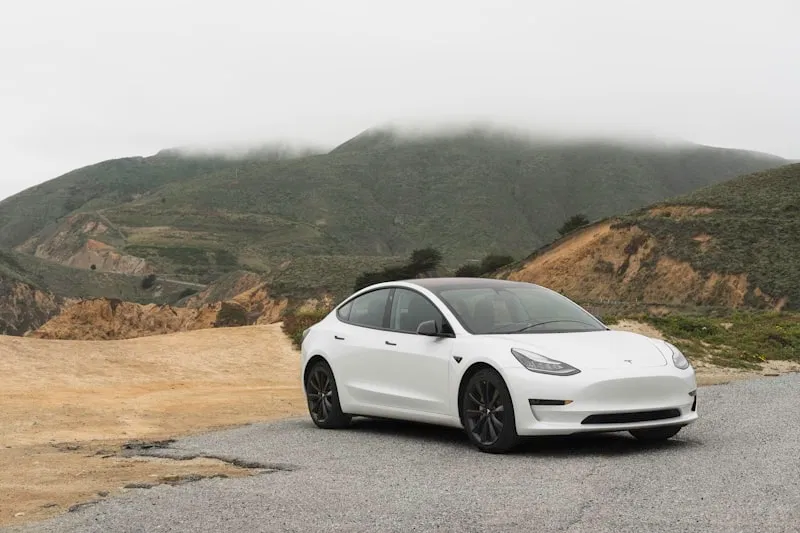
Operating an electric vehicle in Southern California demands navigating unique infrastructural, mechanical, and regulatory realities. For Tesla owners across Redlands, San Bernardino, Riverside, and the broader Inland Empire, experiencing a collision: whether a minor parking lot scrape in downtown Redlands or a severe highway impact on the I-10: brings immediate stress. Beyond the physical damage to the vehicle, vehicle owners face a complex maze of insurance adjusters, repair estimates, and manufacturer stipulations.
When your vehicle is an advanced electric machine engineered with bonded aluminum structures, thermal management coolant loops, and sophisticated Advanced Driver Assistance Systems (ADAS), the stakes surrounding post-collision repairs are exceptionally high. A critical question that often surfaces after the dust settles is whether your manufacturer warranty remains intact.
Many vehicle owners assume that as long as a shop gets the car rolling again, factory protections continue seamlessly. Unfortunately, Tesla’s warranty terms, structural repair protocols, and parts requirements operate under strict guidelines. Choosing the wrong repair facility or accepting non-approved aftermarket parts can jeopardize thousands of dollars in potential warranty coverage for battery packs, drive units, and structural integrity…
The Anatomy of Tesla’s Warranty Structure
To understand how a collision impacts your Tesla’s coverage, you must first examine the distinct categories of manufacturer protection provided by Tesla Inc. Unlike traditional internal combustion vehicles where engine and transmission warranties dominate, EVs rely heavily on high-voltage architecture, thermal management systems, and centralized computing modules.
Tesla divides its coverage into distinct tiers:
- The New Vehicle Limited Warranty: Typically covering the vehicle for 4 years or 50,000 miles (whichever comes first), this warranty addresses defects in materials or workmanship of parts manufactured or supplied by Tesla under normal operating conditions. Crucially, this baseline warranty explicitly excludes accidents, collisions, or objects striking the vehicle.
- The Battery and Drive Unit Limited Warranty: Spanning 8 years or 120,000 to 150,000 miles depending on the specific model (Model 3/Y Rear-Wheel Drive versus Long Range/Performance variants), this protects the high-voltage battery capacity retention and drive units against manufacturing failure. While normal degradation is expected, sudden component failures or coolant leaks caused by improper structural repairs can lead to denied warranty claims.
- The Parts, Body & Paint Repair Limited Warranty: Covering Tesla-branded replacement parts purchased directly from Tesla or installed by authorized facilities for 12 months or 12,500 miles.

A collision itself does not instantly nullify your entire factory warranty. However, any damage directly resulting from an accident is excluded from manufacturer defect coverage. The real danger arises when collision repairs are performed improperly. If a non-certified shop botches a structural weld, misaligns a high-voltage battery shielding bracket, or uses non-OEM structural adhesives, subsequent failures in adjacent systems can be: and routinely are: denied coverage by Tesla under the grounds of outside influence or improper repair methodology.
Certified Collision Repair vs. Standard Body Shops: The Structural Compliance Gap
When seeking an auto body shop redlands residents trust, discerning vehicle owners must recognize that traditional collision repair techniques designed for steel-bodied sedans of the 1990s cannot safely or legally restore a modern Tesla.
Tesla vehicles utilize ultra-high-strength steel, aluminum castings, structural epoxy adhesives, and laser-welded joints. The vehicle body acts as a primary protective enclosure for the high-voltage lithium-ion battery pack situated beneath the floorpan.
Why Tesla Mandates Specific Repair Standards
Tesla’s official body repair guidelines enforce strict engineering rules that ordinary body shops often lack the tooling or training to follow:
- Zero Structural Pulling: Tesla explicitly states that no structural pulling is allowed on its vehicles using traditional chain-and-pot-hole bench methods. Structural alignment must be achieved through dedicated fixture benches and precision measuring systems that maintain exact factory tolerances.
- Component Replacement vs. Repair: Unlike traditional shops that routinely section, heat, and hammer damaged metal rails, Tesla mandates that structural members, crash-sensor brackets, and parts adjacent to safety systems must be replaced, not repaired.
- Thermal Limitations: If structural adhesives are heated above 100°C (212°F) during panel removal without strict adherence to procedure, the adhesive bond degrades, permanently compromising crash energy absorption load paths.
When you partner with a certified auto collision repair facility, you ensure that every technician working on your vehicle has completed rigorous, model-specific factory training. At RVCCR, our integration with our Tesla certification standards ensures that your vehicle is restored using exact factory specifications, preserving both structural crashworthiness and warranty eligibility.
The Hidden Dangers of Aftermarket and Salvage Parts
Insurance carriers frequently attempt to lower claim payout costs by specifying "LKQ" (Like Kind and Quality), salvage, or aftermarket crash parts. While this practice is commonplace for conventional gasoline vehicles, applying it to a Tesla introduces severe structural and electrical risks.
1. High-Voltage Battery Cooling and Thermal Protection
The battery pack in a Tesla Model 3, Model Y, Model S, or Model X is temperature-regulated by a complex network of extruded aluminum cooling channels and glycol coolant lines running through the front and side subframes. Aftermarket front bumper reinforcements or crash cans that vary by even a few millimeters in thickness or gauge can exert abnormal pressure on these coolant lines during minor impacts or thermal expansion, leading to internal coolant leaks, electrical short circuits, and catastrophic battery thermal events. Tesla’s warranty explicitly voids coverage on battery packs damaged by coolant contamination originating from non-approved structural components.
2. ADAS Sensor Calibration and Autopilot Reliability
Tesla's Autopilot and Full Self-Driving (FSD) suites rely on an intricate array of ultrasonic sensors, radar units, and high-definition cameras mounted inside bumpers, windshields, and fender repeaters. Aftermarket bumper covers often feature sensor mounting brackets that are slightly misaligned, thicker, or manufactured from inferior composite plastics that absorb radar waves incorrectly. A non-certified repair can leave your vehicle with phantom braking, unresponsive collision avoidance warnings, or disabled safety features: none of which will be covered under Tesla factory electronics warranties if traced back to unapproved parts.
3. Fasteners and Structural Adhesives
Tesla specifies exact, one-time-use fasteners, specialized aluminum rivets, and aerospace-grade structural epoxies for every assembly. Reusing deformed factory fasteners or substituting generic hardware store bolts creates galvanic corrosion risks between dissimilar metals (such as steel bolts in aluminum castings) and weakens structural load paths designed to dissipate kinetic energy away from the cabin.
To explore how strict adherence to original equipment manufacturer guidelines protects your investment, review our dedicated Tesla and EV certified repair services.
Navigating Insurance Claims Without Compromising Your Warranty
Dealing with insurance adjusters after a collision can feel like an uphill battle. Insurance policies often contain clauses stating they will pay for repairs using "comparable replacement parts." However, vehicle owners hold the legal right to choose where their vehicle is repaired in California.

When filing a claim for your Tesla in the Inland Empire, follow these essential steps to protect your warranty and your vehicle's resale value:
- Demand a Pre-Repair and Post-Repair Diagnostic Scan: Modern Teslas run continuous diagnostic checks on hundreds of electronic modules. A collision disrupts communication networks, occupant restraint systems, and sensor arrays. Insurance estimates must include complete pre- and post-repair diagnostic scans performed using factory service software (Tesla Toolbox).
- Insist on 100% New Tesla OEM Parts: Review the initial insurance estimate line by line. Reject any line items specifying recycled, aftermarket, or LKQ structural parts. Request that your chosen Certified collision repair facility work directly with your insurer to supplement the estimate for genuine Tesla parts.
- Request a Tesla Post-Repair Inspection Report: Upon completion, ensure the shop provides a detailed repair summary verifying that all structural welds, adhesives, fastener replacements, and ADAS calibrations were executed strictly according to Tesla's official service manual.
Beyond EVs: Applying OEM Standards Across All Vehicle Platforms
While high-tech electric vehicles require exacting precision, the philosophy of uncompromising, factory-spec restoration applies equally across the entire automotive spectrum. Whether you drive a late-model Subaru, Ford, Honda, Mazda, or require specialized motorhome collision repair, the integrity of your vehicle's build determines your safety on the road.
At RVCCR, our family-owned shop has served Redlands and the Inland Empire for over 21 years. We combine collision repair, professional automotive painting, and complete mechanical services under one roof. Whether you are dealing with a minor parking lot ding on your daily driver, major structural frame damage on a Tesla, or fiberglass reconstruction on a luxury Class A motorhome, our commitment remains unchanged: restoring every vehicle to exact factory specifications backed by a written lifetime warranty.

Reclaim Your Peace of Mind Today
Navigating vehicle repairs and manufacturer warranties after an accident should never feel like a gamble with your safety or your wallet. By insisting on certified technicians, genuine OEM parts, and factory-approved repair procedures, you safeguard your Tesla's advanced technology, structural integrity, and remaining factory coverage.
Do not leave your vehicle's future to chance or settle for shortcuts dictated by insurance profit margins. Take control of your repair journey today by scheduling a free estimate with our experienced team in Redlands. Let RVCCR restore your vehicle to factory perfection, protect your warranty, and get you safely back on the road for your next adventure!
Need a repair estimate?
Skip the wait — send us a few photos and our team will get back to you fast.
Start a Photo Estimate →