Rivian Certified Collision Center in the Inland Empire: What R1T and R1S Owners Need to Know
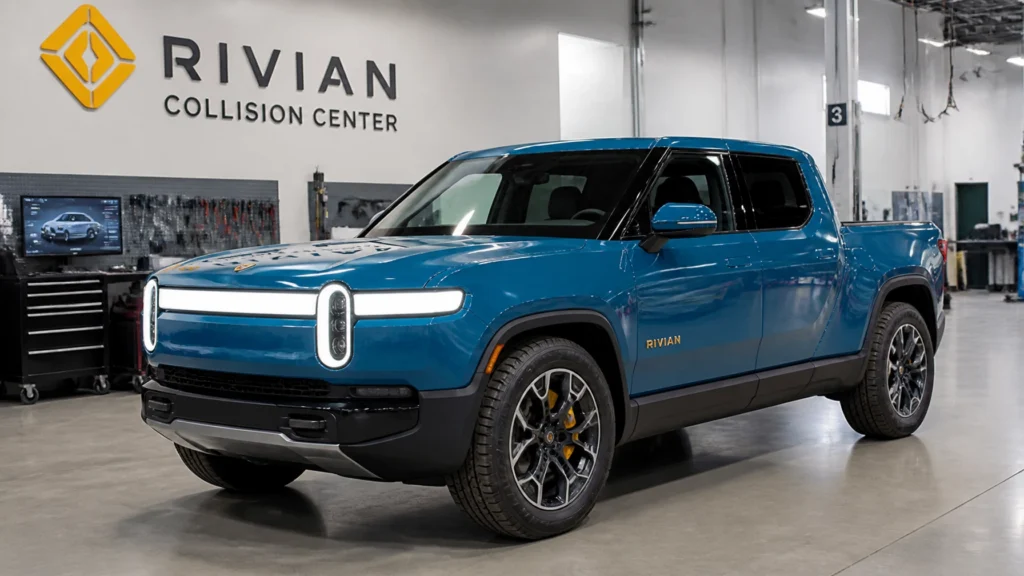
For owners of the Rivian R1T and R1S in the Inland Empire, the vehicle is more than just a means of transportation; it is a sophisticated mobile computer encased in a complex, multi-material structural shell. When a collision occurs: whether it’s a minor parking lot scrape or a significant structural impact: the repair process is fundamentally different from a traditional internal combustion vehicle. Because Rivian uses a unique combination of high-strength steel, aluminum extrusions, and a proprietary "skateboard" battery platform, the technical requirements for restoration are exceptionally high.
RVCCR is proud to be a Rivian Certified Collision Center, a designation that requires extensive investment in specialized tooling, rigorous technician training, and a deep understanding of the Rivian Repair Standards. As a family-owned business serving Redlands and the surrounding Inland Empire for over 21 years, we understand the specific needs of EV owners. We aren't just a standard body shop; we are a specialized facility equipped to handle the unique engineering of the R1 platform, ensuring that your vehicle’s safety systems, structural integrity, and performance are restored to factory specifications.
The complexity of these vehicles means that a "standard" repair is often an unsafe repair. From the Restricted Parts program that prevents non-certified shops from accessing critical structural components to the intricate Driver+ ADAS calibration requirements, the path to a proper restoration is narrow. Understanding these variables is the first step in protecting your investment and your safety…
The Reality of Rivian Certification (3P)
To maintain the safety and performance of the R1T and R1S, Rivian established a "3P" (Third Party) Certified Collision Network. Unlike many traditional brands where any shop can buy parts and attempt a repair, Rivian restricts access to their technical data and critical parts to a select few facilities that meet their stringent requirements.
Becoming a Rivian Certified Collision Center involves more than just a decal on the front door. At RVCCR, our certification means we have undergone a comprehensive evaluation of our facility, equipment, and staff. This includes:
- Specialized Technician Training: Our team completes Rivian-specific training modules covering high-voltage safety, structural bonding, and specialized welding techniques.
- Factory-Approved Tooling: Rivian requires specific aluminum-safe tools, structural pulling systems, and diagnostic software that are not found in general repair shops.
- Direct OEM Access: We have a direct line to Rivian’s engineering and parts departments, ensuring we are using the most up-to-date repair procedures for the R1T, R1S, and even the Electric Delivery Van (EDV) fleet vehicles.
For owners searching for a certified auto collision repair in Redlands, this certification is your guarantee that the shop has the exact equipment specified by the manufacturer to handle the specific alloys and electronic systems of your vehicle.
The Rivian Structural Difference: The Skateboard Platform
At the heart of every Rivian is the "skateboard" platform. This chassis houses the battery pack, drive units, suspension, and thermal systems. While this design provides an incredibly low center of gravity and exceptional off-road performance, it also creates a unique challenge for collision repair.

The skateboard is a structural member. In a significant impact, the force is distributed through the frame and into the battery housing. Standard shops often attempt "frame pulling" to straighten a vehicle, but Rivian’s position on structural pulling is very strict. Due to the high-strength steel and aluminum used in the frame, traditional pulling can compromise the material's strength, leading to "work hardening" or microscopic fractures that could fail in a subsequent accident.
If the skateboard itself is damaged beyond specific OEM tolerances, it often requires component replacement rather than repair. This is a critical distinction. At RVCCR, we use precision electronic measuring systems to compare your vehicle’s current state against factory-blueprinted dimensions. If the frame is out of alignment, we follow the exact Rivian procedures for restoration, which may involve replacing bolted or welded structural members rather than attempting to "tug" them back into place. This is why standard motorhome frame straightening techniques for heavy coaches are entirely different from the precision required for a Rivian EV.
Aluminum Repair and the Risk of Cross-Contamination
Rivian utilizes extensive aluminum in the R1T and R1S to save weight and improve range. Repairing aluminum is vastly different from repairing traditional mild steel. Aluminum has no "shape memory," meaning once it is deformed, it does not easily return to its original form without specialized heating and pulling techniques.
More importantly, aluminum and steel are incompatible in a repair environment. If steel dust (from grinding a Ford F-150, for example) lands on a bare aluminum Rivian panel, it causes a chemical reaction known as galvanic corrosion. This results in the paint bubbling and the metal eventually deteriorating from the inside out.
As a certified facility, RVCCR maintains a dedicated aluminum repair area. We use:
- Aluminum-Specific Tools: Brushes, hammers, and grinders that never touch steel vehicles.
- Clean Room Environments: Curtains and specialized extraction systems to prevent cross-contamination.
- Advanced Bonding and Riveting: Rivian uses a "Cold Join" process for many panels, involving structural adhesives and specialized rivets rather than traditional heat-based welding. This preserves the integrity of the aluminum's heat treatment.
Using a shop that handles both steel and aluminum in the same open bay is one of the biggest risks an R1 owner can take. When you visit a tesla body shop Inland Empire or a Rivian-certified facility like ours, you are paying for the technical isolation required to keep your EV’s body panels from corroding years down the line.
Driver+ and ADAS: The Calibration Requirement
The Rivian Driver+ system is one of the most advanced driver-assistance suites on the market. It relies on a network of 11 cameras, 5 radars, and 12 ultrasonic sensors to provide 360-degree visibility and features like Highway Assist and Automatic Emergency Braking.
In even a minor collision, these sensors can be knocked out of alignment. A camera that is off by just one-tenth of a degree can equate to the vehicle "seeing" an object several feet away from its actual position when traveling at highway speeds.

At RVCCR, calibration is not a "recommendation": it is a mandatory part of the repair procedure. We perform:
- Static Calibration: Using precision targets in a controlled environment to reset camera and radar baselines.
- Dynamic Calibration: Driving the vehicle under specific parameters to allow the software to "learn" the environment and confirm the sensors are communicating correctly.
- Pre- and Post-Repair Scans: Every Rivian that enters our shop receives a full diagnostic scan to identify "hidden" fault codes in the ADAS modules that may not trigger a dashboard warning light.
Failing to calibrate these systems can lead to ghost braking, lane-drift issues, or the complete failure of safety features when you need them most. We ensure your Driver+ system is as reliable as the day you took delivery.
Rivian’s Restricted Parts Program
One of the most misunderstood aspects of Rivian repair is the Restricted Parts list. Rivian does not sell structural components, high-voltage battery parts, or certain specialized fasteners to the general public or non-certified shops.
If you take your R1T to a non-certified ev repair shop near me, they may be able to order a bumper cover or a side mirror. However, if the repair requires a structural pillar, an aluminum frame rail, or any part related to the high-voltage system, they will be blocked from purchasing those parts. This often leads to "part stalling," where a vehicle sits in a shop for months while the owner and the shop realize they cannot finish the job.
As a certified partner, RVCCR has priority access to the Rivian supply chain. We use only 100% genuine Rivian OEM parts. We do not use aftermarket, salvaged, or "reconditioned" parts on Rivian vehicles, as these can compromise the vehicle’s safety ratings and potentially void your factory warranty. Rivian's stance on aftermarket parts is clear: any part not verified by their engineering team is a liability.
R1T Bed vs R1S Enclosed Rear: Different Repair Considerations
Although the R1T and R1S share Rivian’s underlying skateboard platform, the upper body structures above that platform are not interchangeable from a repair-planning standpoint. That distinction matters after a collision. Two vehicles can arrive with damage in roughly the same rear-side area, yet the correct inspection path, parts strategy, and repair method can be very different because one is a pickup with an open cargo bed and the other is an enclosed SUV body with a third-row passenger zone.
On the R1T, the cargo bed introduces repair considerations that are unique to the pickup. Rivian’s repair information identifies the pickup bed side as a carbon-fiber-reinforced composite assembly that is bolted to the aluminum body structure. In practical terms, that means damage in the bed sidewall area is not automatically handled the same way as a damaged aluminum outer panel elsewhere on the vehicle. A scrape, crease, or impact near the bed side can require R1T-specific composite inspection and repair procedures rather than standard aluminum panel work. The technician has to determine whether the damage is limited to the composite bed assembly, whether mounting points were affected, and whether the adjoining aluminum structure also needs measurement.
The R1T also has another major pickup-specific feature: the gear tunnel and its side doors. Those doors are exclusive to the R1T, and they are not just cosmetic closures. They have to align precisely to latch correctly, maintain proper panel gaps, and seal against water intrusion and wind noise. Even a moderate side impact that appears concentrated on the quarter area can create secondary issues with gear tunnel door fit, hinge geometry, striker position, or surrounding panel alignment. That means the repair plan often has to include more than visible outer-body work. It may also require Rivian-specific checks for sealing surfaces and door operation before the vehicle is considered complete.
The R1S presents a different set of priorities because its rear body is an enclosed SUV structure rather than an open bed. The rear section of the R1S includes the tailgate structure, the third-row seating area, and rear climate-control components, including the rear HVAC unit. When an R1S is struck from the rear or rear corner, the inspection scope has to consider more than cargo-floor cosmetics. The rear body structure helps define the occupant compartment around the third row, so a repairer has to assess whether the impact affected the third-row occupant safety zone, floor structure, rear body panels, inner reinforcements, latch mounting areas, or adjacent sealing surfaces.
This is one of the biggest differences between the two vehicles. A rear impact on an R1T may center the repair conversation on the composite bed assembly, gear tunnel alignment, and pickup-specific mounting relationships. A rear impact on an R1S can extend deeper into enclosed-body structural inspection because the damaged area sits next to passenger seating, tailgate hardware, trim retention points, and rear HVAC packaging. In other words, both vehicles may wear the Rivian badge and share the same platform underneath, but the upper body repair requirements diverge in important ways once the impact moves above the skateboard.
For owners, the takeaway is simple: model-specific repair planning matters. A certified Rivian collision center should not treat an R1T rear-side hit and an R1S rear-side hit as variations of the same job with different exterior panels. The correct process starts with identifying the actual body architecture involved, then following the OEM repair path for that exact vehicle. That is how a shop protects structural integrity, water sealing, safety-system performance, and long-term fit and finish.
Rivian EDV Fleet Repairs: What Commercial Operators Need to Know
Rivian collision work is not limited to consumer R1T and R1S vehicles. Commercial operators may also need support for Rivian Electric Delivery Van repairs, and those jobs typically move through a different administrative and repair workflow than a retail customer claim. The van itself serves a different use case, the claim handling is often tied to commercial fleet policies, and the approval chain can be more structured from the start.
EDV repairs are frequently managed through commercial fleet insurance or fleet-management programs rather than a standard personal auto policy. That changes the logistics. In many cases, the repair process includes defined reporting timelines, claim-routing requirements, utilization tracking, and approval checkpoints before work proceeds from estimate to teardown, from teardown to supplement, and from supplement to final authorization. For a fleet operator, that documentation is not just paperwork. It affects uptime, routing decisions, and how quickly a vehicle can be returned to service.
The vehicle construction side can differ as well. EDV aluminum body panels are engineered for high-utilization commercial duty, and that can influence how damage is evaluated. A certified shop handling EDV work has to follow the applicable Rivian repair procedures and determine whether a damaged panel falls within repairable limits or crosses an OEM threshold where replacement is required. That repair-or-replace analysis is especially important in fleet work because operators naturally focus on downtime and total operating cost, while the shop still has to stay inside manufacturer standards for safety, durability, and proper fit.
Another difference is coordination. A Rivian-certified collision center handling EDV repairs may need to work directly with a fleet management system that requires additional status updates, damage photos, estimate revisions, and approval records beyond what a private owner would typically see. Commercial operators often need clearer line-of-sight into parts status, repair milestones, and projected return-to-service timing because a damaged delivery van can affect route capacity immediately. That is why documentation discipline matters so much on fleet jobs.
For commercial operators in Redlands and across the Inland Empire, geography matters too. Sending an EDV long distances for certified repair can add transportation delay on top of the actual body repair timeline. Having access to a local Rivian-certified collision center can reduce downtime compared with pushing the vehicle out to a farther-away service point. The shorter the logistics chain, the easier it is to complete inspections, approvals, supplements, quality checks, and final release without unnecessary handoffs.
The practical point for fleet managers is that EDV collision repair is its own category. It is not simply “an R1S, but bigger,” and it should not be managed like a standard consumer body claim. A shop that understands certified EV structural work, commercial documentation, and fleet communication can help an operator get vehicles back into service faster and with fewer administrative surprises.
How Rivian OTA Updates Interact with Collision Repairs
Modern Rivian repair is not only about panels, brackets, welds, adhesives, and calibrations. It is also about software state. Rivian vehicles receive over-the-air updates that can affect how vehicle systems behave, what diagnostic information appears, and how certain post-repair checks need to be completed. That means collision repair planning has to account for both hardware restoration and software compatibility.
OTA updates can affect several systems relevant to collision work, including ADAS calibration parameters, battery-management thresholds, and diagnostic code behavior. A vehicle may arrive at the shop running one software version, then sit through estimate approval, parts ordering, structural repair, refinish, reassembly, and calibration while Rivian releases a newer version. If that happens, the shop cannot assume the software environment at delivery should remain frozen at the collision-date version. The repaired hardware and the installed software must be compatible at the time the vehicle goes back to the owner.
That is why software verification belongs near the end of the repair process as well as the beginning. If Rivian has issued an update between the collision date and the repair completion date, the technician must confirm the vehicle is on the correct software version before final calibration and pre-delivery checks are completed. In some cases, the update itself can change the calibration procedure, the required scan flow, or the way the vehicle validates a repaired component. A repair that is physically correct but finalized under an outdated software condition can create unnecessary warning messages, incomplete system initialization, or failed calibration steps.
This is also one reason certified access matters. A Rivian-certified collision center maintains the active OEM subscriptions and procedural access needed to review current repair information, confirm diagnostic steps, and check for software-related requirements during the repair and before delivery. The goal is not simply to clear codes and move on. The goal is to verify that cameras, sensors, modules, and repaired components are operating in the software environment Rivian expects for that vehicle at that point in time.
A non-certified shop may be able to complete cosmetic body work, but it cannot guarantee that the vehicle’s software state is properly synced with the repaired hardware. That gap matters on a modern EV where driver assistance, battery behavior, diagnostics, and module communication are tightly integrated. For Rivian owners, software compatibility is now part of repair quality, not a separate convenience item.
Common Rivian Collision Patterns in the Inland Empire
Living in the Inland Empire means your Rivian likely sees a mix of heavy freeway commuting on the I-10 and I-215, along with off-road excursions to the Big Bear mountains or the high desert. We see several common damage patterns specific to the R1 platform:
1. The "Gear Tunnel" Side Impact
The unique Gear Tunnel is a favorite feature, but its location makes the rear quarter panels and doors susceptible to side-swipe damage. Because this area involves complex seals and hinges for the tunnel doors, precise alignment is required to ensure the area remains watertight.
2. Off-Road Underbody Damage
Given the Rivian's capabilities, we often see damage to the underbody aero-shields and the "rock sliders." While these parts are designed to be rugged, impact with a large rock can transfer force into the skateboard frame. We conduct detailed inspections of the battery's protective shielding to ensure no cells were compromised by the impact.
3. Highway Stone Chips and Glass
The upright windshield of the R1S and R1T is a magnet for road debris. Replacing a Rivian windshield is not a job for a mobile glass van. It requires the removal of interior trim and the precise recalibration of the forward-facing cameras that sit behind the rearview mirror.
4. Parking Lot "Dings" in Aluminum
Because aluminum is harder to "dent repair" than steel, even a small door ding in a grocery store parking lot can require a specialized glue-pulling technique to avoid repainting the entire side of the vehicle.
Choosing the Right Shop: Why RVCCR?
When you are looking for a certified auto collision repair in Redlands, the certification is the floor, not the ceiling. What sets RVCCR apart is our 21-year history as a family-owned business. We treat every Rivian as if it were our own adventure vehicle.
We offer:
- Written Lifetime Warranty: We stand behind our workmanship for as long as you own the vehicle.
- Insurance Coordination: We work with all major insurance carriers, including Rivian’s own insurance program, to handle the paperwork and supplements so you don't have to.
- Mechanical & Body Under One Roof: Unlike many body shops that have to sublet mechanical work, we have certified mechanical technicians who understand EV drivetrains and cooling systems.
- Transparency: We provide detailed estimates and photos of the repair process, so you know exactly what is happening under the skin of your vehicle.
If you have been involved in an accident, the first step is a professional assessment. Even if the damage looks "cosmetic," the underlying sensors and aluminum structures need a trained eye to verify their integrity.

Your Path Back to the Trail
A collision is a setback, but it shouldn't be the end of your Rivian journey. Whether you're planning a trip to Joshua Tree or just navigating the daily commute through the Inland Empire, you deserve to feel confident that your vehicle is as safe as the day it was built.
At RVCCR, we combine the specialized technology required for Rivian and Tesla body shop Inland Empire repairs with a commitment to old-fashioned customer service. We don't cut corners, we don't use non-OEM parts, and we never compromise on safety.
Don't leave your R1T or R1S in the hands of a generalist. Trust the certified experts who have the tools, the training, and the dedication to do the job right the first time.
Contact RVCCR today for a free estimate or to schedule your Rivian certified repair. Let's get your adventure back on the road.
Need a repair estimate?
Skip the wait — send us a few photos and our team will get back to you fast.
Start a Photo Estimate →