RV Parts Lead Times Are Stretching to 18 Weeks – Here’s What That Means for Your Motorhome Repair
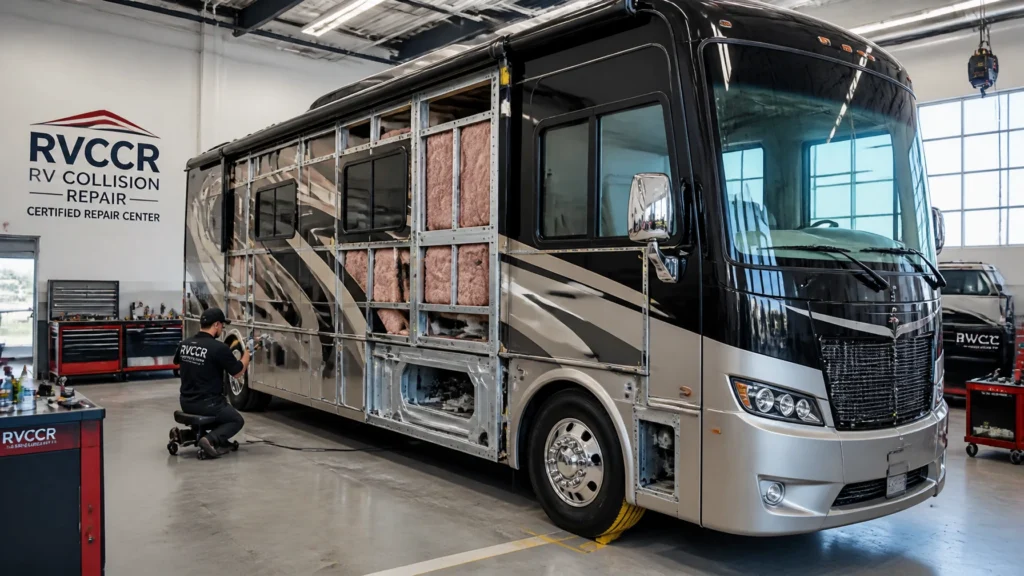
As an RVDA-certified collision and mechanical repair facility with over two decades of experience in the Inland Empire, we recognize that the current logistics landscape presents a unique set of challenges for motorhome and travel trailer owners. The intersection of global trade policy, raw material scarcity, and regional port congestion has created a complex environment where traditional repair timelines are being fundamentally restructured. For owners in Redlands and the surrounding areas, understanding these variables is no longer just a matter of curiosity; it is a critical component of managing a successful vehicle restoration and getting back to the adventures that define the RV lifestyle.
The technical complexity of modern RVs: ranging from high-gloss gel coats and structural aluminum extrusions to advanced ADAS safety systems: requires a precision supply chain that is currently under immense strain. As of mid-July 2026, several independent data points suggest that the "just-in-time" delivery model for specialized RV components has shifted toward a "just-in-case" planning requirement. For those currently navigating an insurance claim or planning a major structural restoration, the logistical reality is that the gap between a vehicle's arrival at a shop and its final return to the road is widening due to forces far beyond the service bay.
Managing the expectations of our Inland Empire customers requires a transparent look at the data driving these delays, from the price of 6061-T6 aluminum to the container throughput at the Port of Los Angeles. The situation is nuanced, involving multiple layers of international logistics and material science…
The July 2026 Logistics Landscape: By the Numbers
To understand why a repair that might have taken four weeks in 2023 now faces a much longer horizon, we must look at the Tier-1 data sources currently circulating within the industry. According to the ALI Supply Chain Alert issued on June 22, 2026, global lead times for critical RV components have extended to a projected 18-week average. This is a significant departure from historical norms and is driven by a "perfect storm" of logistical bottlenecks.

Port Congestion and Sea Lead Times
While the Port of Los Angeles and the Port of Long Beach are operational, they are processing record volumes that have led to significant yard congestion. Data from July 2026 indicates a 91% yard congestion rate, which essentially means the physical space to move and sort containers is at a premium.
Furthermore, sea lead times: the time it takes for a vessel to travel from major Asian manufacturing hubs to the West Coast: now average 52 days. When you combine this with a 17% year-over-year increase in TEU (Twenty-foot Equivalent Unit) volume, the result is a secondary bottleneck at the inland warehousing level. For RV owners, this means that even if a part exists in a factory overseas, the journey to a Redlands auto body shop involves navigating a gauntlet of logistical hurdles.
The Impact of Ocean Freight Rates
The cost of moving these parts has also seen a dramatic spike. Spot rates for Asia-to-U.S. West Coast routes have recently jumped 23%, crossing the $6,800 per FEU (Forty-foot Equivalent Unit) threshold. While consumers rarely see these costs directly on an invoice, they manifest as "availability surcharges" or, more commonly, as a prioritization of higher-margin components by manufacturers, often pushing specialized RV parts further down the production queue.
Material Science: The Aluminum Crunch of 2026
RVs are marvels of lightweight engineering, relying heavily on aluminum for frames, sidewall supports, and roofing components. However, the aluminum market in 2026 has become increasingly volatile. China's recently implemented aluminum profile export quotas, combined with supply shocks in global smelting operations, have driven prices for 6061-T6 aluminum: the industry standard for structural RV components: up 12% to approximately $3,820 per ton.

For a certified RV collision repair facility, this isn't just about the cost of the metal; it's about the availability of the specific extrusions required to meet OEM safety standards. At RVCCR, we refuse to compromise on structural integrity. If a motorhome requires a specific aluminum corner extrusion to maintain its factory-certified safety rating, we will wait for that OEM part rather than substitute it with a generic, non-certified alternative.
This commitment to quality is highlighted in our discussion of OEM parts vs. aftermarket components, where we explain why structural fidelity is the only path to a safe, long-term repair. In 2026, however, that commitment means contending with 18-week lead times for those very parts.
Why 18 Weeks? Breaking Down the Timeline
Owners often ask, "Why can't the shop just order it from a warehouse in the U.S.?" The answer lies in the "just-in-time" inventory practices that became standard across the RV industry over the last decade. Manufacturers like Tiffin, Winnebago, and Thor often rely on a constant flow of components rather than massive domestic stockpiles. When that flow is interrupted by 52-day sea lead times and 91% port congestion, the domestic buffer evaporates quickly.
- Component Importation (8-10 Weeks): This includes manufacturing the part and the 52-day transit across the Pacific.
- Port and Customs Clearance (1-2 Weeks): Navigating the current yard congestion at LA/Long Beach.
- Inland Logistics (2 Weeks): Moving the part from a port-side container to a regional distribution center, and finally to the Inland Empire.
- Shop Processing (1-2 Weeks): Inspection, supplements, and preparation for installation.
This 18-week cycle is particularly prevalent for custom-formed fiberglass panels, specialized slide-out motors, and structural aluminum components. For owners dealing with RV roof replacement, the lead times can vary based on whether the material is TPO, fiberglass, or aluminum, but the general trend remains upward.
Part Category Lead Times: What to Expect for Each Component Type
Not every RV part falls into the same delay bucket. One of the biggest mistakes owners make is hearing "18 weeks" and assuming every item on the estimate will take that long. In reality, lead time depends on whether the part is a high-volume maintenance item, a common chassis component, or a low-volume RV-specific body or structural piece. The practical difference matters because a repair can only move at the pace of its slowest critical part.
Below is a working breakdown of what shops and customers are typically dealing with in mid-2026 when sourcing RV collision and mechanical components for motorhomes, fifth wheels, and travel trailers in Southern California.
| Part category | Typical lead time | Common examples | Why timing varies |
|---|---|---|---|
| Commodity parts | 1-3 weeks | Sealants, filters, basic fasteners, standard lighting bulbs | High-volume items with multiple suppliers and regional distributor stock |
| Aftermarket body panels | 3-6 weeks | Fenders, lower trim, generic mirrors | Depends on aftermarket supplier inventory and shipping lane stability |
| OEM mechanical parts | 4-8 weeks | Brake calipers, suspension components, A/C compressors for common Ford or Mercedes chassis | Often available through dealer networks, but still subject to backorders |
| RV-specific fiberglass caps | 8-14 weeks | Front caps and rear caps for specific model years | Frequently made to order for a narrow production run |
| OEM structural aluminum extrusions | 12-18 weeks | Wall supports, corner extrusions, framing members | Affected by export quotas, low stock levels, and port delays |
| Custom graphics and decal kits | 6-10 weeks | Side graphics, brand striping, model-specific decal sets | Manufacturer approval, print scheduling, and model-specific matching requirements |
| Slide-out mechanisms and motors | 10-16 weeks | Slide drive assemblies, motors, rails, gear packs | Highly model-specific with limited interchangeability |
Commodity Parts: Usually the Fastest Category
Commodity parts are the items most likely to move quickly through the supply chain. Sealants, filters, common clips, basic hardware, and standard replacement bulbs are used across many repair categories, not just RV service. That matters because distributors are more likely to keep them on shelves in the Inland Empire, Los Angeles, Phoenix, or other regional hubs. If one supplier is out, another supplier may have an equivalent approved product available.
That is why these parts often arrive in one to three weeks instead of three months. They are ordered in higher volume, stocked by more than one warehouse, and used by a broad range of service providers. In practical terms, a missing sealant or a standard bulb usually does not define the total repair timeline. These are the parts a shop can often source without waiting for a manufacturer production slot.
Aftermarket Body Panels: Faster Than OEM in Some Cases, But Not Guaranteed
Aftermarket body panels, such as certain fenders, lower trim pieces, and generic mirror assemblies, can sometimes move faster than OEM body parts because the aftermarket serves multiple repair markets. However, "aftermarket" does not automatically mean "available now." If supplier stock is thin or the part is oversized and requires special freight handling, the lead time can still stretch.
A three-to-six-week window is realistic for many of these components in 2026, especially when the supplier already has stock in the western U.S. The delay tends to increase when the panel is less common, ships from a distant warehouse, or arrives damaged and must be replaced. This is also where repair planning matters. For a cosmetic panel that is not critical to structural integrity, aftermarket availability may help the job move sooner. For structural or fit-sensitive areas, the shop may still recommend OEM.
If you want a deeper explanation of when a non-OEM option makes sense and when it does not, our article on OEM parts vs. aftermarket components breaks down the tradeoffs in plain language.
OEM Mechanical Parts: Better Supported, But Still Vulnerable to Backorders
OEM mechanical parts for common Ford and Mercedes-based motorhome chassis are often easier to locate than RV-specific body components. Brake calipers, suspension parts, steering components, and many A/C compressors move through established dealer networks. That dealer infrastructure is important because it creates more possible touchpoints for locating inventory.
Even so, easier does not mean immediate. A four-to-eight-week range is still common in 2026 when the part is not sitting at a nearby dealer and has to be moved across the network. For common chassis-based repairs, the repair may progress more smoothly than a body reconstruction job because the underlying vehicle platform has a wider support system than the coach body built on top of it. But if a critical chassis part is tied to an electronic module or a low-stock part family, the timeline can still expand.
This is one reason complete estimates matter so much. A repair plan that only accounts for visible body damage can miss the suspension, steering, or brake parts that also need to be sourced after an impact.
RV-Specific Fiberglass Caps: Slow Because They Are Narrow-Application Parts
Front caps and rear caps are among the most frustrating parts in RV repair because they are usually specific to a certain manufacturer, model line, and model year. A cap for a 2021 coach may not fit a 2020 version, even when the units look similar from a distance. That narrow fitment means these parts are often produced in limited quantities or made to order after a replacement request is approved.
An eight-to-fourteen-week lead time is common when the manufacturer has to schedule production, pull the correct mold, or coordinate the finish state of the part before it ships. Freight adds another layer because fiberglass cap components are oversized, fragile, and expensive to move. If the cap arrives with transit damage, the replacement cycle can restart.
This is where customers often feel the difference between automotive collision repair and RV repair. A passenger vehicle bumper cover may be available through a deep distribution network. A Class A or fifth-wheel fiberglass cap often is not.
OEM Structural Aluminum Extrusions: The Long-Lead Critical Path Item
Structural aluminum extrusions are often the part category most likely to control the entire repair schedule. These pieces are not generic angle stock grabbed from a local shelf. They are specific shapes engineered to support walls, corners, roof transitions, slide openings, and other structural zones. The shop needs the correct profile to restore the vehicle to the intended design.
The 12-to-18-week range reflects several combined issues: low-volume production, dependence on specialized extrusion runs, the impact of China's aluminum profile export quotas, and the delay introduced by port and inland logistics. When a repair requires one of these components, the job can stall even if every other item is already on site.
For a certified RV collision repair facility, substituting the wrong structural member is not a shortcut. It is a liability. Proper structure matters to panel fit, water sealing, slide-out alignment, and crashworthiness. That is why structural aluminum delays are not just inconvenient. They are often the main reason a motorhome repair takes months instead of weeks.
Custom Graphics and Decal Kits: Cosmetic, But Often Required to Finish the Job
Custom graphics are not always the longest-lead item, but they are regularly misunderstood. A coach may be structurally complete and fully functional before the exact manufacturer-matched graphic package arrives. For many owners, especially those with newer units, that final appearance matters. Insurers also commonly expect the visible finish to be restored when the repair scope includes damaged decals or branded striping.
A six-to-ten-week lead time is typical because these kits often require manufacturer confirmation, artwork matching, production scheduling, and large-format printing. The color, scale, and model-year layout must be correct. If the manufacturer changed the design mid-cycle or no longer stocks the exact kit, the process can take longer.
This category does not always hold up structural work, but it can delay final delivery when the owner wants the vehicle returned in fully completed condition instead of "repair now, decals later" status.
Slide-Out Mechanisms and Motors: Slow Because They Are Highly Specific
Slide-out systems are one of the most model-specific assemblies on an RV. A motor, rail set, controller, or gear pack may only apply to a narrow set of floorplans or production ranges. Even within the same manufacturer, two coaches may use different slide hardware depending on weight, room depth, and supplier generation.
That is why 10-to-16-week lead times are common for slide-related parts. Many are not stocked in large numbers because the demand is specialized and the components are expensive. If damage occurs to a slide-out room during a collision, the repair may require a body shop, a structural technician, and a mechanical systems specialist to coordinate around one hard-to-source assembly.
For owners, the key takeaway is simple: the broad "18-week" headline is real, but it usually applies to the slowest critical components, not every nut and bolt on the estimate. A well-run shop will identify which parts are fast, which parts are uncertain, and which part category is likely to define the real delivery date.
The ALI Supply Chain Alert: What It Actually Says
The ALI Supply Chain Alert dated June 22, 2026 is important because it does more than repeat a vague warning about "industry delays." It identifies the specific forces pushing RV repair timelines outward and explains why repair facilities need to front-load their parts ordering strategy.
According to the alert, global lead times for RV components extended to an 18-week average. That average is not limited to one brand or one category of repair. It reflects a broad slowdown affecting body parts, structural materials, selected chassis components, and model-specific assemblies used across the RV repair market.
The alert points to three primary drivers:
- West Coast port labor disruptions at Los Angeles and Long Beach. Even when ports remain open, labor instability and reduced fluidity at the terminals can slow unloading, container transfer, and onward movement to regional distribution points.
- China's aluminum profile export quotas. Because structural aluminum profiles are used in many RV framing and body support applications, restrictions in export flow can create bottlenecks for exactly the kind of parts that cannot be easily substituted.
- Increased seasonal demand for RV components. As summer travel peaks, more vehicles are in active use, more collision and wear-related repairs enter the system, and replacement demand rises at the same time the supply chain is already strained.
The alert also identifies several secondary drivers that matter to repair timing even when they are less visible to the customer. These include shortages of semiconductor components used in certain chassis control modules, labor shortages in inland warehousing, and rail capacity constraints that interfere with the movement of freight from port to inland distribution channels. In other words, even after the part lands in California, the logistics chain is still vulnerable.
Just as important, the alert includes practical guidance for repairers. It recommends that shops place orders as early as possible, maintain open communication with OEM parts distributors, and prepare customers for extended timelines before the repair enters the heavy production stage. That recommendation aligns with what experienced RV repair facilities already know: the best time to solve a lead-time problem is before the vehicle is waiting in a stall for one missing part.
The Regional Impact: Inland Empire and the 2026 Peak
The Inland Empire serves as a major hub for logistics, which means we see the effects of port congestion firsthand. As containers move from the ports of LA and Long Beach into the massive warehouse districts of San Bernardino and Riverside, the local infrastructure is under constant pressure. For a motorhome owner in Redlands, this means that even after a part "clears the port," it may sit in a regional queue for days or weeks before a local carrier can deliver it to our facility.

Furthermore, the summer of 2026 has seen a 17% increase in regional repair demand. As more families take to the road, the frequency of "minor scrapes" and major collisions increases, further taxing the available pool of certified technicians and specialized repair bays. This localized demand surge, coupled with the global parts shortage, creates a double-layered delay that requires meticulous shop management to overcome.
Proactive Claim Management: The Role of Insurance Supplements
One of the most complex aspects of an RV repair in this environment is the insurance supplement process. In a typical collision repair, a shop identifies the initial damage, creates an estimate, and begins work. However, once the vehicle is disassembled, "hidden damage" is often discovered. In a stable supply chain, this is a minor hurdle. In 2026, a newly discovered broken bracket or a damaged ADAS sensor can trigger a secondary 18-week wait.
This is why our team at RVCCR emphasizes a "Total Disassembly" approach. By stripping the vehicle down to its structural core early in the process, we can identify 95% of required parts in the first week. This allows us to submit a comprehensive supplement to your insurance carrier immediately, starting the 18-week clock on all parts simultaneously rather than discovering them one by one.
This level of technical foresight is especially critical for modern EVs and high-end motorhomes equipped with Advanced Driver Assistance Systems (ADAS). As we’ve noted in our technical brief on ADAS recalibration for EVs and modern RVs, these sensors are often highly specialized and sensitive to the same global supply chain disruptions affecting aluminum and fiberglass.
The Insurance Supplement Timing Trap
The supplement process is one of the least understood reasons an RV repair timeline can expand before the long-lead part is even ordered. From the customer side, it can look like the shop wrote an estimate and then "nothing happened" for several weeks. In reality, that time is often consumed by teardown findings, documentation, insurer review, and approval delays.
A common scenario looks like this:
- Initial estimate: The visible collision damage suggests a $5,000 repair.
- Teardown begins: Once the damaged exterior is removed, the shop finds a bent aluminum frame rail behind the body panel.
- Critical hidden damage appears: That frame rail is an OEM structural part priced at roughly $2,500.
- Lead time becomes the real issue: The frame rail has a 16-week lead time.
- Supplement submission: The shop submits a supplement to the insurance carrier with updated photos, measurements, and revised line items.
At that point, the part still may not be ordered if carrier approval is required first. In many claims, the insurance carrier takes 5 to 15 business days to review the supplement. If the carrier approves quickly, the order can move sooner. If the carrier questions the need for the part, asks whether repair is possible instead of replacement, or requests more documentation, the process slows down.
That back-and-forth is where customers lose time without always realizing it. The shop may need to provide close-up photos, structural measurements, OEM repair reasoning, or additional labor notes. The adjuster may escalate the file internally or request another inspection. If there is disagreement over the scope, price, or repair method, negotiation follows before the final approval is issued.
In practical terms, that exchange can add two to four weeks before the part is even ordered. That means the elapsed time from vehicle drop-off to actual parts ordering can reach three to six weeks based on supplement handling alone. Then the 16-week part lead time begins. This is why an owner may feel blindsided by a repair that stretches far beyond the original visible estimate.
The takeaway is not that supplements are unusual. They are normal in collision repair, especially on larger RVs where exterior damage often hides structural issues. The real lesson is that supplement timing must be treated as part of the repair schedule, not as a side note. A shop that documents thoroughly and submits a complete supplement early gives the customer the best chance of starting the long-lead ordering process sooner.
What Customers Should Do About Scheduling
When lead times are this long, scheduling decisions matter almost as much as repair technique. Customers cannot control port congestion or manufacturer production cycles, but they can control when the repair process begins and how organized the claim becomes in the first few days.
1. Bring the RV in for a Free Estimate and Early Teardown
If you suspect collision, structural, slide-out, roofline, or suspension damage, do not wait until the month before your trip to start the process. The important timing issue is this: the parts clock usually starts when the scope is identified and the supplement is approved, not simply when the vehicle is dropped off.
That is why an early estimate matters. A free estimate gives the shop the starting point, but a teardown often reveals the real ordering list. If the repair is likely to involve hidden damage, the earlier you authorize the inspection and teardown process, the earlier the shop can begin identifying what will actually be needed.
2. Ask the Shop to Identify All Parts in the First Teardown, Not in Stages
A staged discovery process creates staged delays. If the shop orders visible parts first, then finds additional structural damage two weeks later, and then finds slide-related damage another week after that, each discovery can restart the waiting period for a new category of part.
Customers should ask a direct question: can the shop perform the most complete practical teardown up front so the full parts list is known as early as possible? That approach is especially important on larger motorhomes and fifth wheels where cosmetic damage can hide frame, mount, substructure, and systems damage.
3. If the Vehicle Is Drivable, Coordinate Drop-Off Timing With the Shop
Not every damaged RV needs to sit at the shop for the entire waiting period. If the vehicle is safe to operate and weather-tight, some owners may be better off using or storing the unit elsewhere until the critical parts are either confirmed or physically on hand. That depends on the repair type, insurance process, and how much teardown is needed to lock down the final scope.
This is not a one-size-fits-all answer. In some situations, the shop may want the vehicle on site to complete teardown, process the supplement, and hold the file open. In others, the smart move is to inspect, document, order, and then schedule final drop-off around the expected arrival of the long-lead parts. Coordinating that decision early can reduce unnecessary downtime.
4. If the Vehicle Is Not Drivable, Discuss Storage Options Immediately
If the RV has a safety issue, major collision damage, structural compromise, lighting loss, steering damage, brake concerns, slide instability, or exposure to water intrusion, it may not be safe to keep moving or storing casually. In that case, storage becomes part of the repair planning discussion.
Customers should ask where the vehicle will be stored, whether indoor or secured outdoor space is available, and how the shop handles a long wait when major parts are on order. Having that conversation early helps prevent confusion about where the vehicle will sit during the approval and ordering phase.
5. Plan Around the 18-Week Window
If you need the RV for a specific trip, the safest assumption is not "it will probably work out." The safer assumption is that a repair involving RV-specific body or structural parts may require about five months of planning. An 18-week window is already more than four months, and that does not always include supplement delays, production backlogs, freight damage, or scheduling the actual repair work once the part arrives.
For practical planning, if you have a major trip in mind, schedule the repair at least five months in advance when the damage appears likely to involve a cap, structural framing, slide-out mechanism, or model-specific coach component.
6. Ask for Weekly Parts Status Updates
Customers are often told, "We'll call you when we know something." That approach creates unnecessary anxiety during a long-lead repair. A better strategy is to ask for weekly status updates on parts ordering, supplement approval, and shipment progress.
A weekly cadence does two things. First, it keeps communication clear so you know whether the delay is at the insurer, the OEM, the freight stage, or the shop scheduling stage. Second, it gives both parties a structured moment to catch problems early, such as a backordered part being superseded, partial shipment issues, or a missing supplement approval.
In a normal year, passive communication may be good enough. In a year where certain RV parts are stretching toward 18 weeks, active scheduling and active communication are the better path.
How RVCCR Navigates the 18-Week Horizon
We are not passive observers of this supply chain crisis. Being a family-owned business for 21 years has taught us that the difference between a shop that survives and a shop that thrives is its ability to adapt. To protect our Inland Empire customers from unnecessary delays, we have implemented several strategic protocols:
- Direct OEM Relationships: We leverage our certifications with Ford, Honda, Tesla, and RVDA to bypass third-party wholesalers whenever possible, going directly to the manufacturer's source.
- Proactive Inventory: For high-wear items and common structural profiles, we maintain a larger on-site inventory than standard industry practices would dictate.
- Logistics Tracking: We don't just wait for a tracking number. Our team monitors regional port data and carrier availability to ensure that once a part is in the U.S., it reaches our Redlands facility without idling in a warehouse.
- Clear Communication: We provide realistic, data-backed timelines. If the ALI alert says 18 weeks for your specific Tiffin or Winnebago part, we tell you that on day one, not day ninety.
Reclaiming Your Adventure: The Path Forward
The logistics of 2026 may be challenging, but they are not insurmountable. The ultimate goal of any repair is not just to fix a vehicle; it is to restore the freedom that comes with RV ownership. Whether you are planning a trip to the Sierras or a cross-country tour, the integrity of your motorhome is the foundation of those memories.
While the "18-week" headline can be daunting, it underscores the importance of choosing a partner who understands the complexities of the modern world. At RVCCR, we combine our technical certifications with a deep understanding of global logistics to ensure that your repair is handled with the precision it deserves. We don't just manage parts; we manage the process of getting you back to the lifestyle you've earned.
Bring your motorhome or travel trailer to our Redlands facility for a comprehensive estimate. Let our certified team handle the insurance negotiations, the material sourcing, and the meticulous restoration work that your vehicle requires.
Drive with confidence. Reclaim your horizon. Start your next adventure with a vehicle restored to factory specifications by the Inland Empire’s trusted experts.
Need a repair estimate?
Skip the wait — send us a few photos and our team will get back to you fast.
Start a Photo Estimate →