The Aluminum Clean Room: Why Tesla and EV Collision Repair Depends on Metal Isolation You Can’t See
RVCCR is a family-owned, certified collision repair facility serving Redlands and the Inland Empire, with Tesla, Rivian, Ford, Honda, Mazda, and Subaru certifications, Fix Auto Network membership, and RVDA certification for RV work. That background matters when a damaged vehicle contains aluminum panels, mixed-metal structures, high-voltage systems, and manufacturer-specific repair limits.
For Tesla and EV owners, the visible dent is only part of the repair problem. The facility must control steel dust, use aluminum-only tools, separate grinding operations, protect bare metal, and follow the vehicle manufacturer’s instructions for reshaping, joining, refinishing, scanning, and calibration. The most important safeguards may happen inside a dedicated aluminum repair area that many customers never see…
What an “Aluminum Clean Room” Really Means
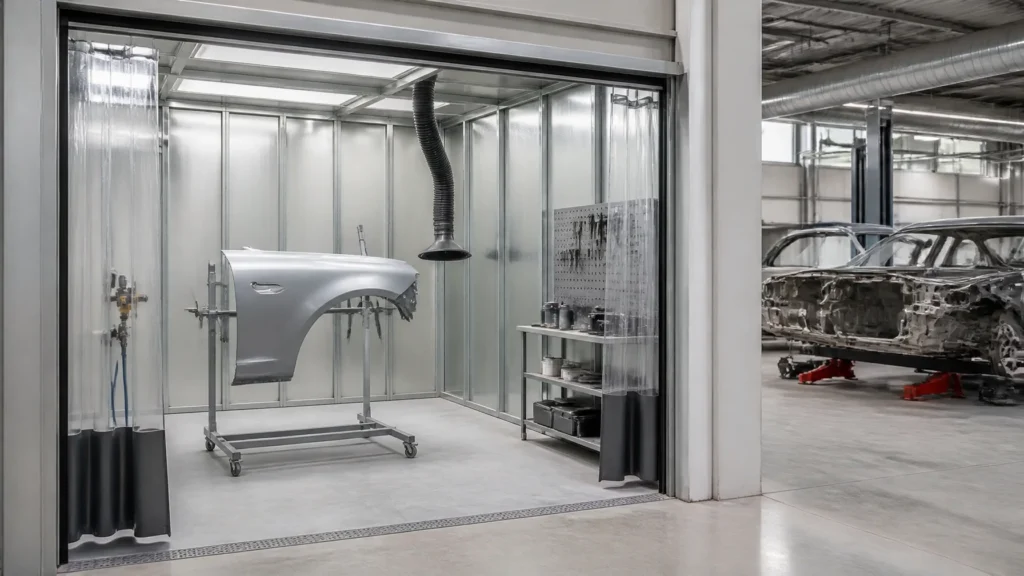
In collision repair, an aluminum clean room does not necessarily mean a sterile laboratory with medical-grade filtration. It usually means a dedicated, physically separated work area designed to keep aluminum repair away from steel grinding, sanding, welding, and dust-producing operations.
Depending on the facility and manufacturer program, that area may be:
- A separate enclosed room
- A dedicated aluminum repair bay
- A curtained isolation zone
- A controlled work area with dedicated dust extraction
- A combination of physical separation, tool segregation, cleaning procedures, and material controls
The objective is simple: keep ferrous particles away from exposed aluminum.
Ford’s official Certified Collision Network requirements call for a dedicated or isolated aluminum repair area, separation from vehicles undergoing steel repairs, and a dedicated system for aluminum dust removal. Tesla’s body repair documentation similarly requires dedicated aluminum tools and warns that tools used on steel must not be used on aluminum components.
That distinction is important. A shop does not become aluminum-capable merely because it owns an aluminum welder or has repaired an aluminum fender once. The entire environment has to support contamination control.
When you are searching for an EV repair shop near me, the question is not only whether the shop can make the panel look straight. Ask whether it can keep the panel clean while the work is being performed.
Why Steel Dust Is a Serious Threat to Aluminum
Aluminum and steel are different metals with different electrochemical properties. When dissimilar metals are connected in the presence of moisture or another electrolyte, galvanic corrosion can occur. In a vehicle repair environment, steel particles can create a localized corrosion risk when they become embedded in bare aluminum or remain trapped beneath coatings.
The contamination may come from ordinary shop activity, including:
- Grinding steel panels
- Sanding steel welds
- Cutting steel components
- Using a steel-contaminated hammer or dolly
- Reusing sanding discs or abrasives
- Moving a shared vacuum from steel work to aluminum work
- Using ordinary carbon-steel wire brushes on aluminum
- Tracking dust into the aluminum repair area on gloves, clothing, or equipment
The problem is often invisible at first. The finished vehicle may leave the shop with an attractive paint finish and correct panel alignment. Later, corrosion can develop beneath the coating, creating bubbling, blistering, flaking, or premature paint failure.
Ford’s aluminum corrosion service tip identifies iron contamination as a cause of bubbling or blistering beneath paint on aluminum body parts. The same document instructs repair facilities to section off metalworking areas, keep aluminum tools separate, and use stainless-steel brushes on aluminum.
I-CAR also cautions that steel particles embedded in bare aluminum can react with the aluminum and cause surface imperfections, galvanic corrosion, premature panel damage, and paint failure.
This is why the clean room is not a marketing decoration. It is a corrosion-prevention control.

The Four Controls Behind a Proper Aluminum Repair Area
A reliable aluminum repair process depends on several controls working together. A physical barrier alone is not enough if technicians carry contaminated tools into the bay. Dedicated tools are not enough if steel dust is pulled through a shared extraction system.
1. Physical separation
The aluminum area must be separated from steel repair activity. Ford’s published collision network requirements describe either a separate room or a curtain system and specify a minimum area for the dedicated work zone.
The exact layout varies by facility, but the principle remains consistent:
- Steel grinding does not happen inside the aluminum zone.
- Aluminum parts are not left exposed beside active steel work.
- Steel dust-producing operations are kept away from bare aluminum.
- The separation must be practical enough for technicians to follow every day.
A curtain system can be effective when it is properly used, but an open curtain that is constantly moved aside during grinding does not provide meaningful protection. The facility’s workflow matters as much as its construction.
2. Dedicated hand and power tools
Tesla’s body repair guidance states that tools used on steel must not be used on aluminum components. This includes more than the obvious grinder.
A dedicated aluminum tool set can include:
- Hammers
- Dollies
- Body spoons
- Files
- Picks
- Clamps
- Pliers
- Drill bits
- Sanding tools
- Grinding wheels
- Abrasives
- Wire brushes
- Dent-pulling equipment
- Rivet and joining tools
Tools should be clearly identified and stored separately. A technician should not have to remember whether a particular dolly was used on a steel quarter panel three months earlier. A controlled system removes the guesswork.
Even a tool that appears clean can carry ferrous particles in grooves, around fasteners, on a backing plate, or inside a sanding attachment. That is why “we wiped it off” is not the same as a dedicated aluminum tool.
3. Dedicated dust extraction and vacuum systems
Grinding and sanding generate particulate matter. The dust must be captured at the source and handled without transferring contamination between materials.
A proper aluminum area may use:
- A dedicated pneumatic vacuum system
- A dedicated wet-mix or immersion-style extraction system
- Vacuum-assisted sanding
- Separate hoses and collection containers
- Local extraction at the repair tool
- Cleaning procedures for floors, benches, and fixtures
The extraction system itself must be treated as part of the contamination-control plan. If the same vacuum, hose, collection container, or filter is used on steel and aluminum without an approved cleaning and segregation process, the system can become a transfer path.
The goal is not to claim that aluminum dust and steel dust are identical hazards. They are not. The goal is to control both materials and prevent ferrous contamination from reaching an exposed aluminum repair.
4. Segregated grinding and sanding
Grinding and sanding are among the most significant contamination risks in a mixed-material collision shop. Steel operations can release fine particles that settle on nearby surfaces, tools, clothing, and vehicles.
For that reason, aluminum and steel operations should be scheduled and physically separated. A credible process includes:
- No steel grinding inside the aluminum area
- No exposed aluminum panel near active steel grinding
- Separate abrasives for aluminum and steel
- Dedicated sanding tools or approved decontamination procedures
- Frequent cleaning of benches and floors
- Careful handling of repaired parts before priming
- Prompt protection of bare aluminum after preparation
Tesla’s repair guidance also gives specific limits for aluminum refinishing preparation. For example, its aluminum cosmetic repair tech note warns against using sanding wheels or belts coarser than 80 grit on aluminum components because the aggressive abrasive can create fractures.
Why Aluminum Cannot Be Repaired Like Steel
Many vehicle owners have seen a technician use hydraulic equipment to pull a bent steel structure back toward its original position. That image can create a dangerous assumption: if steel can be pulled, aluminum can be pulled the same way.
For structural aluminum, that is not an acceptable shortcut.
Aluminum can be affected by work hardening. When it is deformed, the material’s properties change in the damaged area. Repeated bending, aggressive pulling, heating, or reshaping can produce cracking or a weakened repair zone even when the metal appears visually acceptable.
Tesla’s body repair procedures distinguish between cosmetic outer-panel repairs and structural components:
- Certain exterior aluminum panels may be reshaped with approved hand tools or tension equipment.
- Structural components may not be reshaped or repaired unless the applicable Tesla repairability procedure specifically allows it.
- Hydraulic equipment intended for structural pulling may not be used for the repairs described in the procedure.
- Frame-mounted tension towers may not be used for those structural repairs.
- Extruded and cast aluminum components require component-specific repair instructions.
- Damaged parts near certain safety-related components may require replacement rather than repair.
That is the critical distinction: limited cosmetic reshaping is not the same as structural pulling.
An aluminum door skin or exterior quarter panel may be repairable if the damage falls within the manufacturer’s limits. A damaged structural rail, casting, extrusion, or safety-related area may be replacement-only. The technician must identify the material, locate the damage, review the OEM procedure, and determine whether repair is permitted.
A shop that says it can “pull anything back into place” is not demonstrating modern EV competence. A certified repair facility should be able to explain what can be repaired, what must be replaced, and why.
Cold-Working Limits Matter
Cold working means deforming metal without adding heat. It is common in metal finishing, but aluminum has limits that must be respected.
For Tesla’s documented 5xxx- and 6xxx-series aluminum outer panels, cosmetic repairs may be permitted when the damage does not include certain creases or kinks. If the panel has damage that exceeds the repairability limits, replacement may be required.
Cold-working limits depend on:
- The aluminum alloy
- The panel thickness
- Whether the part is cosmetic or structural
- The presence of creases, kinks, tears, or cracks
- The location of the damage
- Whether adhesive joints or sensors are nearby
- The manufacturer’s repair procedure
A technician cannot determine repairability from the vehicle badge alone. The exact model, production configuration, component material, and damage pattern all matter.
This is also why generic statements such as “aluminum cannot be repaired” are incomplete. Some aluminum cosmetic panels can be repaired successfully. Some structural aluminum components cannot be pulled or reshaped. The correct answer comes from the OEM procedure, not from a blanket shop policy or an internet forum.
Aluminum-Specific Tooling Is More Than a Different Hammer
A dedicated aluminum repair station includes tools selected to avoid contamination and to work with aluminum’s physical characteristics.
Aluminum hammers and dollies
Aluminum-specific hammers and dollies are kept separate from steel tools. They support controlled metal finishing without transferring ferrous particles to the repair area.
The tool shape and technician technique both matter. Aluminum panels can stretch, crease, or crack when struck too aggressively. The goal is controlled movement, not force for its own sake.
Stainless-steel brushes
Tesla’s aluminum repair instructions specify the use of a stainless-steel brush for certain preparation steps. This should not be confused with an ordinary carbon-steel wire brush.
The brush must be suitable for aluminum work and kept free from contamination. A brush previously used on steel can transfer particles even if it looks clean.
Abrasives and sanding equipment
Aluminum requires appropriate abrasives and controlled preparation. Tesla’s body repair tech note warns against abrasives coarser than 80 grit on the documented aluminum components. I-CAR also emphasizes cleaning and preparation steps designed for bare aluminum and warns against using sanding materials on steel and then on aluminum.
A professional repair plan may call for:
- Dedicated sanding discs
- Dedicated backing pads
- Aluminum-specific grinding wheels
- Controlled grit selection
- Separate storage
- Dust extraction at the point of sanding
- Cleaning and coating soon after metal preparation
Aluminum dent-pulling equipment
Cosmetic aluminum repairs may use specialized dent-pulling systems, including aluminum studs or pull tabs, depending on the manufacturer procedure and panel type.
The equipment must be suitable for aluminum. The technician must also follow restrictions around nearby adhesive bonds, sensors, modules, and high-voltage systems.
Welding wire, equipment, and shielding gas
Aluminum MIG welding is not simply steel MIG welding with a different wire installed. The system may require:
- An aluminum-capable MIG welder
- Appropriate wire-feed equipment
- Correct liner and contact-tip configuration
- Approved aluminum weld wire
- Proper shielding gas specified by the OEM and welding procedure
- Correct machine settings
- A test weld on comparable material
- Verification of weld quality
Tesla’s service documentation directs technicians to approved GMA welders and welding wires for applicable structural repairs. Ford’s collision network requirements also identify aluminum-specific MIG pulse welding equipment and aluminum welding wire as part of certified capability.
The exact wire, gas, power, and joint design depend on the vehicle and procedure. A shop should not substitute materials based on convenience.
Riveting and joining equipment
Modern EV structures may use combinations of adhesive bonding, self-piercing rivets, flow-forming fasteners, welds, and other manufacturer-specific joining methods.
The equipment must match the repair. A steel-focused joining method cannot automatically replace an aluminum joining method. Approved rivet systems, correct fasteners, adhesive preparation, cure times, and corrosion protection all form part of the structural repair.

What a Clean Aluminum Workflow Looks Like
The clean-room concept becomes easier to understand when viewed as a sequence.
Step 1: Identify the materials
The technician determines whether the damaged part is aluminum, steel, plastic, composite, or a mixed-material assembly. On Tesla vehicles, the body repair manual provides material diagrams and operation limits for different components.
Step 2: Determine whether repair is allowed
The technician reviews the manufacturer’s repairability information. This is where the shop separates cosmetic panel repair from structural replacement.
Step 3: Move the work into the correct zone
If aluminum work is permitted, the vehicle or component is positioned in the aluminum area. Steel grinding and sanding are kept out of the zone.
Step 4: Use dedicated tools and abrasives
The repairer selects tools that are stored and maintained for aluminum work. No steel-used hammer, file, brush, disc, or grinder should touch bare aluminum.
Step 5: Control the dust
Extraction is connected to the tool where appropriate. The work area is cleaned before exposed aluminum is prepared. The objective is to prevent airborne and surface contamination.
Step 6: Prepare and repair the metal
The technician follows the OEM procedure for reshaping, welding, riveting, adhesive use, or replacement. Heat limits, panel thickness, repair boundaries, and joining methods are not improvised.
Step 7: Restore corrosion protection
Bare aluminum requires appropriate cleaning, conversion, primer, sealers, cavity protection, and refinishing steps. The exact products and sequence should follow the vehicle maker and product manufacturer instructions.
Step 8: Scan, calibrate, and quality-check the vehicle
The repair is not complete when the panel looks straight. Depending on the collision and vehicle, the shop may need diagnostic scans, sensor checks, wheel alignment, ADAS calibration, high-voltage system procedures, and final verification.
That complete workflow is what separates certified auto collision repair from a cosmetic patch.
What This Means for Tesla and EV Owners
When you are comparing a general body shop with a Tesla certified collision center, ask specific questions about the facility rather than relying on a decal in the lobby.
Consider asking:
- Do you have a dedicated or isolated aluminum repair area?
- Are aluminum tools stored separately from steel tools?
- Are abrasives and wire brushes dedicated to aluminum?
- Is dust extraction dedicated to aluminum work?
- Are steel grinding and sanding operations physically separated?
- How do you determine whether a damaged aluminum part is repairable?
- Do you use manufacturer repair procedures for my exact model?
- Which aluminum-specific welding, riveting, and adhesive systems are available?
- Will the repair include required scans and calibrations?
- How will the shop document hidden damage and supplements?
A trustworthy shop should answer clearly. It should not dismiss the questions as unnecessary or say that aluminum repair is identical to steel repair.
If you are dealing with an insurer, you can also ask the repair facility to document why a particular part must be replaced, why a particular joining method is required, and why dedicated contamination controls are necessary. A well-supported repair plan gives the insurer and owner a factual basis for reviewing the claim.
For more guidance, review RVCCR’s article on certified auto collision repair in Redlands before authorizing work. The right facility should coordinate the technical repair, insurance documentation, parts process, and final quality control.

Why Certification Is a Useful Signal
Certification does not mean every repair is identical, and it does not remove the need to ask questions. It does signal that the facility has invested in manufacturer-specific training, equipment, repair information, and process requirements.
For aluminum and EV collision repair, that investment may include:
- A controlled aluminum repair area
- Dedicated tools
- Approved welding and riveting equipment
- Dust extraction
- OEM repair information
- High-voltage safety procedures
- Diagnostic scanning
- ADAS calibration capability
- Corrosion-protection processes
- Documentation and quality control
Those requirements are difficult to maintain casually. They require space, training, equipment, and disciplined daily procedures.
At RVCCR, we combine collision, paint, and mechanical repair under one roof and coordinate with major insurance carriers. Our goal is to restore vehicles to manufacturer standards using certified technicians and OEM-aligned processes. We also support owners who need more than a body-panel repair, including Tesla and EV owners whose vehicles require structural, electronic, and mechanical verification after a collision.
The Clean Room Protects More Than the Panel
The aluminum isolation area is easy to overlook because customers usually see the estimate desk, paint finish, and completed vehicle: not the controls used before primer is applied.
But the clean room protects:
- The aluminum panel from embedded steel particles
- The finish from premature corrosion
- The repair from hidden contamination
- The manufacturer’s corrosion-prevention requirements
- The owner’s long-term confidence in the work
- The shop’s ability to document a proper repair
The larger lesson is that EV collision repair depends on process discipline. A clean aluminum bay is one visible sign of that discipline. Dedicated tools, extraction, OEM procedures, material identification, careful joining, and post-repair verification complete the picture.
Restore the Vehicle for the Road Ahead
A Tesla or EV collision repair should do more than make the damage disappear. It should restore the vehicle’s structure, corrosion protection, appearance, electronics, and intended safety performance as closely as the manufacturer’s procedures allow.
If your vehicle has aluminum damage in Redlands or anywhere in the Inland Empire, bring it to a facility that understands why isolation matters. RVCCR provides free estimates, coordinates with insurance, handles collision, paint, and mechanical work under one roof, and backs repairs with a written lifetime warranty.
The clean room may be the part of the repair you never see: but it helps protect the quality you expect to live with for years.
Ready to get your Tesla or EV back on the road? Request a free estimate from RVCCR and let a certified team blueprint the repair correctly, protect the materials, complete the required procedures, and restore your next drive.
Primary Technical References
- Tesla Body Repair Procedures: Body Structure Materials and Allowed Operations
- Tesla Body Repair Tech Note: Repairing Aluminum Cosmetic Damage
- Tesla Approved Collision Center Body Repair Program Operating Standards
- Ford Certified Collision Network Minimum Certification Requirements
- Ford Aluminum Corrosion Service Tip
- I-CAR: Preparing Aluminum for Refinishing
Need a repair estimate?
Skip the wait — send us a few photos and our team will get back to you fast.
Start a Photo Estimate →